Black Hills National Forest, National Forest across South Dakota and Wyoming, United States
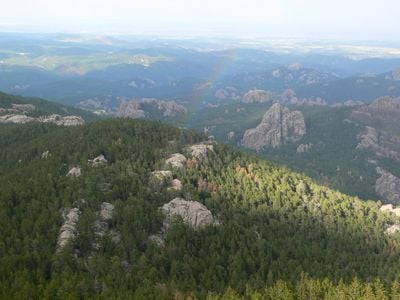
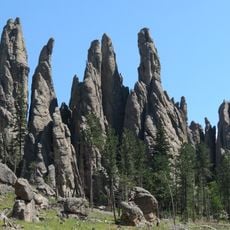
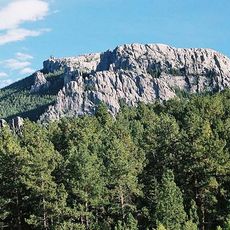
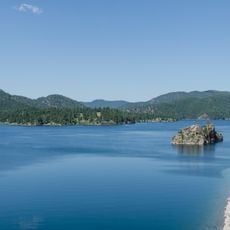
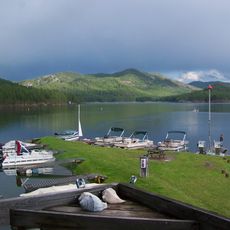
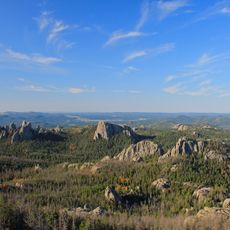
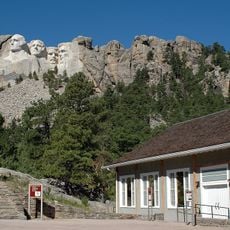
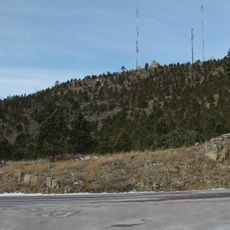
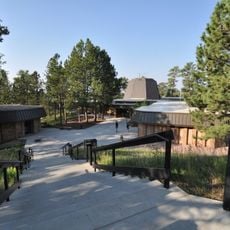
Black Hills National Forest is a vast woodland spanning across South Dakota and Wyoming, characterized by dense pine forests, open grasslands, and rolling mountains. Throughout the landscape, numerous streams and reservoirs create water features that support the diverse ecosystem.
The forest received official protection in 1897 following severe wildfires that had ravaged the region in 1893. This action represented an early government effort to preserve forest resources from further destruction.
The name may derive from the Lakota pahá sápa, "hills that are black," referring to the dark pine cover. Before the La Verendrye brothers arrived in 1742, the Ponca, Kiowa Apache, Arapaho, Kiowa and Cheyenne had frequented the hills for at least 10,000 years. American Horse's winter count of 1775–76 is read as recording the Sioux discovery of the Black Hills.
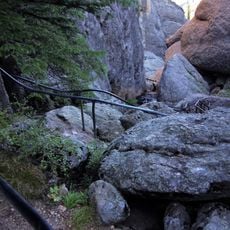
The forest offers multiple campgrounds and marked trails suitable for different skill levels and interests. Visitors should prepare for changing weather conditions and bring appropriate gear for the season.
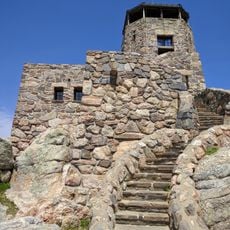
The forest supplied the 1997 Capitol Christmas Tree, a 63-foot white spruce. Black Elk Peak, at 2,207 m the highest summit east of the Rocky Mountains, is reached by trails including the South Dakota Centennial Trail. The Black Hills are among the oldest mountains in North America.
The community of curious travelers
AroundUs brings together thousands of curated places, local tips, and hidden gems, enriched daily by 93,059 contributors worldwide.