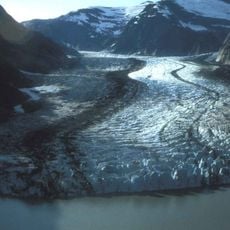
Mount Edziza, Volcanic mountain in Tahltan Highland, Canada
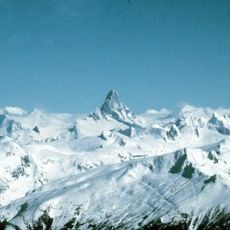
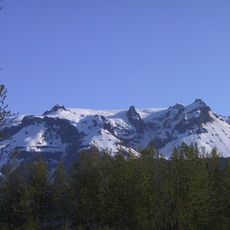
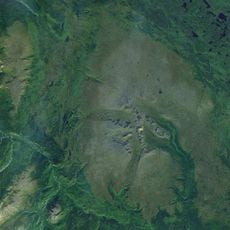
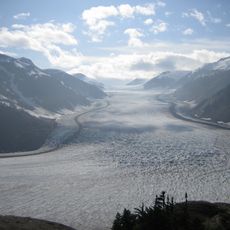
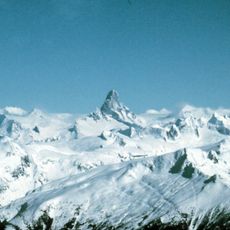
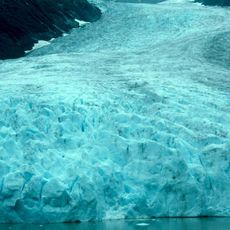
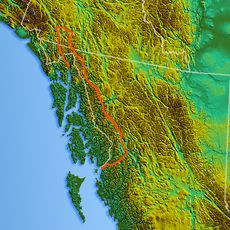
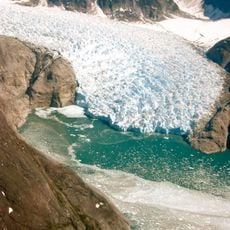
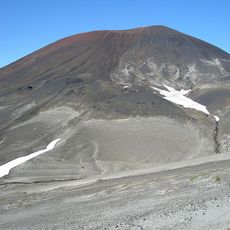
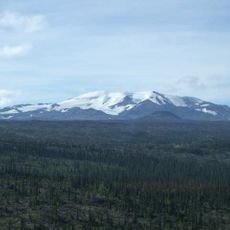
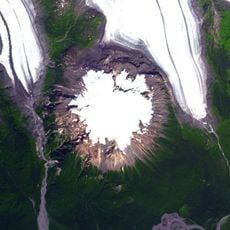
Mount Edziza is a volcano in the Cassiar Land District of northwestern British Columbia, reaching 2,786 metres. Its flat summit holds an ice-filled crater about 2 kilometres wide, the remnant of a cone-shaped peak at least 3,396 metres high that was likely destroyed by a violent eruption. Lava domes, cinder cones and lava fields cover its flanks, and an ice cap feeds outlet glaciers.
Mount Edziza is the central trachyte stratovolcano of a complex whose activity began about 7.5 million years ago; the mountain itself formed in a fourth stage around one million years ago. A fifth stage left thick trachyte flows, and the sixth began in the last 20,000 years with cinder cones and basalt flows, ending around 700 AD.
The Tahltan Nation historically used this mountain as a source of obsidian for making tools and goods that were traded widely throughout the Pacific Northwest. This practice shaped economic ties with neighboring peoples across the region.
Getting to this mountain requires hiking or small aircraft, as no road access exists to this remote wilderness area. Visitors should prepare for wet weather and changeable conditions, especially at higher elevations and during transitional seasons.
Obsidian from Mount Edziza was traded across great distances from about 8000 BC, and the main quarry area lies at roughly 1,800 to 1,900 metres, well above the tree line at about 1,200 metres. Archaeologist Knut R. Fladmark, who led the first investigations in 1981, suggested the mountain's name may come from E'dista, a supernatural toad said to breathe through holes in the mountains.
The community of curious travelers
AroundUs brings together thousands of curated places, local tips, and hidden gems, enriched daily by 92,606 contributors worldwide.