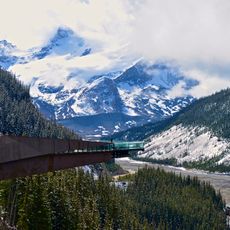
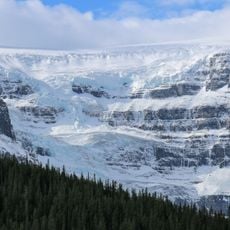
Saskatchewan Glacier, Glacier in Alberta, Canada
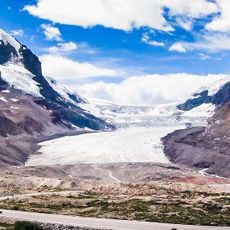
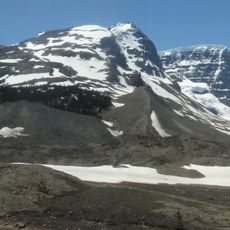
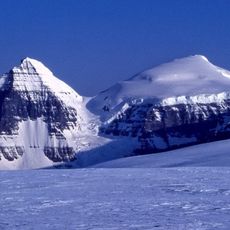
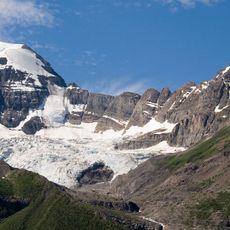
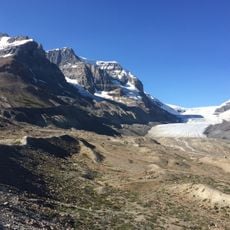
Saskatchewan Glacier is the largest outflow glacier of the Columbia Icefield, on the Continental Divide in Banff National Park, Alberta. It runs about 13 km and covers 30 km², flowing northeast with a prominent medial moraine along its surface. In 1960 it measured over 400 m thick some 8 km from the terminal snout.
Saskatchewan Glacier is the largest outflow glacier of the Columbia Icefield, which lies along the Continental Divide in Banff National Park. Measurements taken in 1960 recorded ice more than 400 metres thick about 8 km from the terminal snout. Between 1893 and 1953 the glacier retreated 1,364 metres, and from 1948 to 1953 the retreat averaged 55 metres per year.
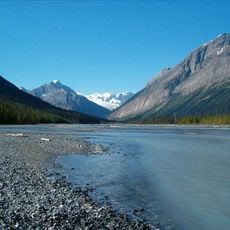
The glacier's meltwater forms the headwaters of the North Saskatchewan River, a waterway that later crosses into Saskatchewan. The name Saskatchewan comes from the Cree word kisiskâciwani-sîpiy, meaning "swift-flowing river", so the glacier carries a Cree-derived name rather than a colonial one. Visitors travelling the Icefields Parkway see this link between ice and river.
Visit only with proper equipment and an experienced guide, as hidden crevasses and unstable ice make independent exploration dangerous. The best time to go is during warmer months when conditions are more stable and hazards are easier to spot.
The glacier's meltwater is the primary source of the North Saskatchewan River, which flows northeast across the Canadian Prairies. The ice also carries a prominent medial moraine, a dark band of rock debris running down its centre, visible from the Icefields Parkway.
The community of curious travelers
AroundUs brings together thousands of curated places, local tips, and hidden gems, enriched daily by 93,751 contributors worldwide.