Tepui, Ancient table-top mountain formations in Guiana Highlands, Venezuela
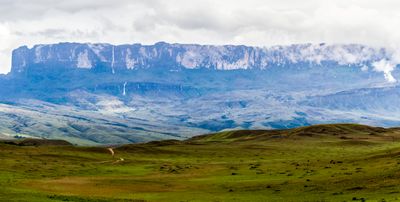
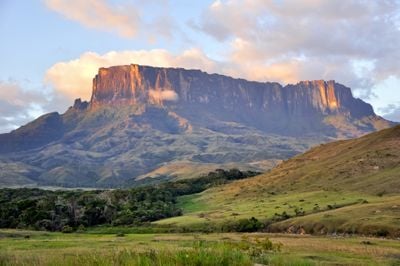
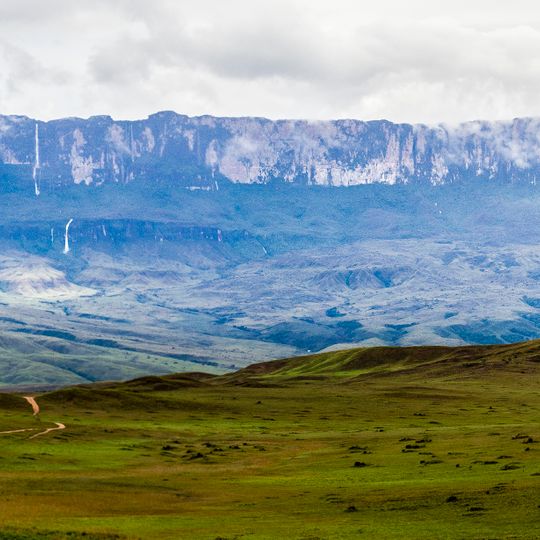
Tepui are massive sandstone plateaus that tower above the rainforest with sheer vertical walls, some reaching over ten thousand feet in height. The flat summits remain isolated by cliffs that drop straight down on all sides, creating natural fortresses in the clouds.
The sandstone plateau that once covered the granite basement between the Amazon and Orinoco basins began to erode and fragment about 300 million years ago; the isolated table-top mountains took shape around 70 million years ago. Major botanical exploration started in the 19th century with Alexander von Humboldt, Aimé Bonpland and Robert Schomburgk, and from the 1950s Julian Steyermark and Bassett Maguire ran the Guayana Shield Program, published as the Flora of the Venezuelan Guayana between 1995 and 2005.
The name tepui comes from the Pemon language and means "house of the gods"; other translations give simply "mountain". The Pemon of the Gran Sabana, the indigenous people of this region, use the word for these table-top mountains. Roraima derives from the Pemon Roro-Ima, "great blue-green", and many Pemon call it "the mother of all waters" because cascades fall from its summit to feed the Orinoco, Essequibo and Amazon rivers.
Visiting requires permits from national park authorities, with most travelers joining guided treks or booking helicopter flights during the dry season. The summits often disappear into clouds, so visibility can change quickly even when conditions seem clear.
The summits shelter plant and animal species found nowhere else on Earth, having evolved in isolation for millions of years. Some frogs and insects live only on a single mountain and were discovered within recent decades.
The community of curious travelers
AroundUs brings together thousands of curated places, local tips, and hidden gems, enriched daily by 93,848 contributors worldwide.