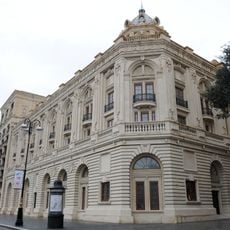
Numismatic Fund of the Museum of History of Azerbaijan, Numismatic collection in National Museum of History, Baku, Azerbaijan
The Numismatic Fund of the National Museum of History of Azerbaijan holds over 100,000 coins, mainly struck in territories of the Shirvanshahs, Sajids, Salarids, Shaddadids, Ildegizids, Kara Koyunlu, Ak Koyunlu, Safavids and various khanates. It also keeps coins of Ancient Greece, Rome, Byzantium, the Seleucids, Parthia, Bactria, the Sassanids, the Arab Caliphate, the Seljuks, the Ilkhanids, the Ottoman Empire, the Afsharids and the Baburids, plus pieces from Western Europe, Russia, India and China.
The numismatic department was founded in 1920 within the State Museum of the Azerbaijan SSR, starting from 103 Greek, Roman and Eastern coins bought from N. M. Yegorov. Yevgeny Pakhomov, who arrived in Baku in 1919, headed it for 35 years and published a nine-part series on coin hoards of the Caucasus. By 1938 the collection reached 2,407 coins, mostly Sassanid pieces found by farmers at Alty-Aghach; by 1975 it held about 85,000.
The collection shows coins and monetary items from different times and regions displayed side by side in glass cases. You can see how differently money looked and what images and inscriptions were stamped on each piece.
The collection is large and requires time to view properly, so plan for at least one to two hours. The galleries are well organized with informational displays in multiple languages to help understanding.
The museum holds roughly two hundred ancient Greek coins discovered near the city of Shamakhi. These coins are rare and date from the period of Alexander the Great to later rulers.
The community of curious travelers
AroundUs brings together thousands of curated places, local tips, and hidden gems, enriched daily by 95,042 contributors worldwide.