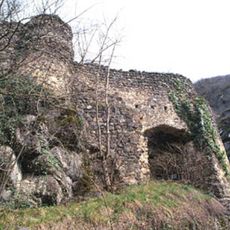
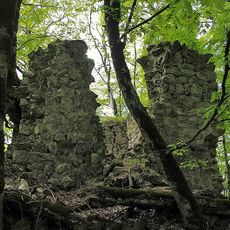
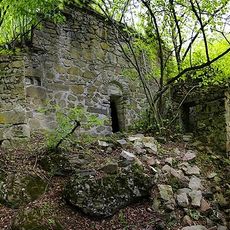
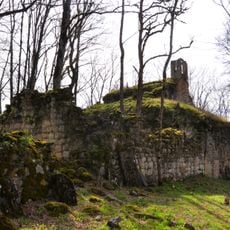
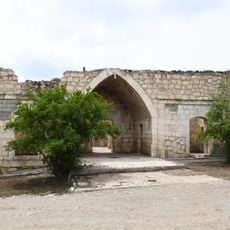
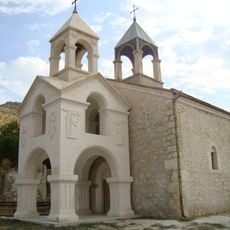
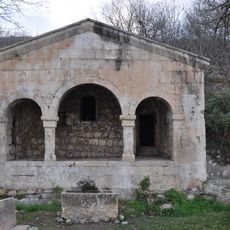
Hakobavank, Armenian monastery in Kalbajar District, Azerbaijan.
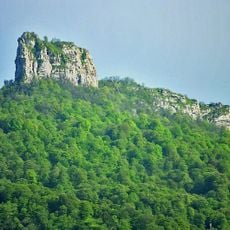
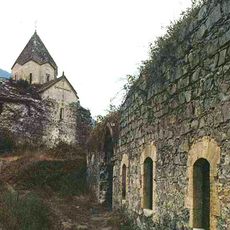
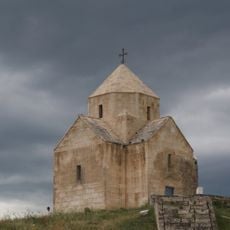
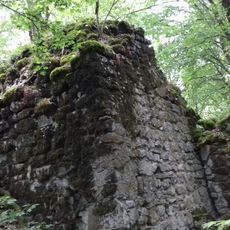
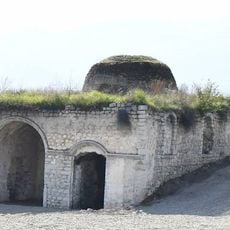
Hakobavank, also called Metsaranits Monastery, stands on a wooded mountain spur 1.5 km north of Kolatak. Its oldest church is a rectangular single-nave hall measuring 7.80 by 3.20 metres, with an unusually high bema reached by a southern stair. Four small square cells (1.30 by 1.30 m) open off the north wall, the eastern one entered beneath the altar. A three-arched gallery with two smoothly cut columns fronts the churches.
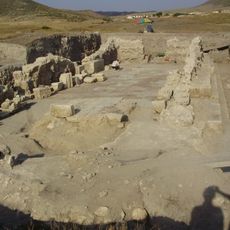
The monastery was established between the 5th and 7th centuries as a religious settlement in the region. Carved inscriptions on stone monuments from the 9th century and beyond record the site's role as a lasting spiritual center throughout medieval times.
The complex is named after Jacob of Nisibis, whose relics were kept here until the 19th century. In the 14th century it became the deaconry of the Mets Arank district. The three-arched hall incorporates pink cross-stones, grey tombstones and cream inscribed slabs, with a sundial carved on light orange stone.
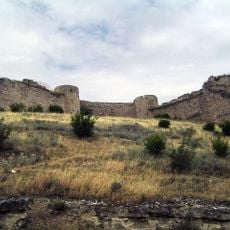
The monastery stands on a wooded mountain spur 1.5 km north of Kolatak, under Azerbaijani control. The complex is reached on foot over uneven ground, so sturdy footwear helps. The oldest inscription, on a khachkar pedestal later set into a church wall, dates to 853.
The western entrance displays three arches supported by finely carved columns that stand apart from the roughly hewn stones found throughout the rest of the complex. This deliberate contrast in craftsmanship suggests the entrance held special importance in the site's design.
The community of curious travelers
AroundUs brings together thousands of curated places, local tips, and hidden gems, enriched daily by 94,230 contributors worldwide.