Gazi Husrev-beg Mosque, Ottoman mosque in Stari Grad, Bosnia and Herzegovina
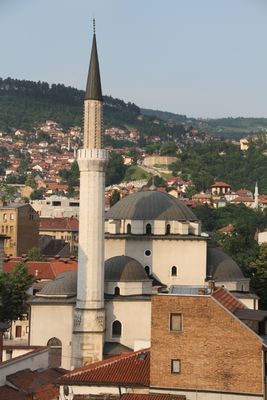
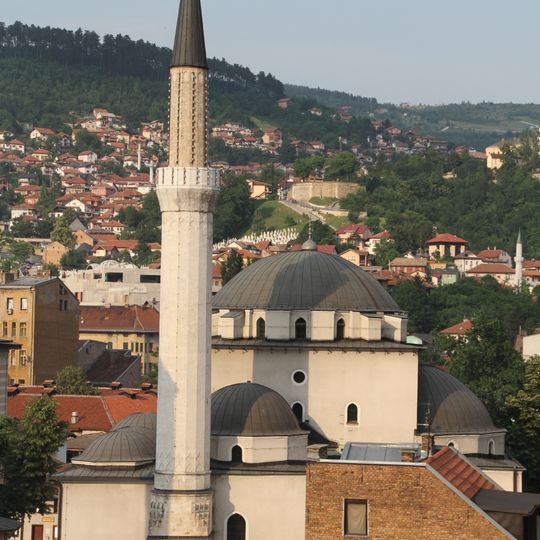
Gazi Husrev-beg Mosque is an Ottoman place of worship in the old quarter of Sarajevo, with a main dome rising above the prayer hall. A slender minaret stands to the side, its balcony once used by callers to announce prayer times, while the courtyard is framed by arcades.
Gazi Husrev-beg Mosque was built in 1530 as the central building of the governor's endowment, which also included a madrasa, a bezistan and a hammam. The architect is unknown; most scholars attribute the design to Acem Ali Tabrizi, a Persian-born Ottoman mimar. Ragusan masons took part in the works. Heavily shelled during the Siege of Sarajevo, it was repaired from 1996 with Saudi aid, and a new interior by calligrapher Hazim Numanagić followed in 2001/2002.
The building bears the name of the Ottoman governor who ruled Bosnia in the 16th century and whose tomb lies in the adjacent garden. On Fridays, the courtyard fills with worshippers arriving for prayer, while the outdoor ablution fountains see continuous use for ritual washing.
Visitors must remove shoes at the entrance and wear modest clothing, with women covering head and shoulders. Outside prayer times, visits are possible, with mornings generally quieter than afternoons.
In the late 19th century, this became the first Muslim place of worship worldwide to receive electric lighting, installed during Austro-Hungarian administration. The lamps still hang in the prayer hall today, recalling that technical innovation.
The community of curious travelers
AroundUs brings together thousands of curated places, local tips, and hidden gems, enriched daily by 93,365 contributors worldwide.