Tito’s Cave, Military cave refuge in Drvar, Bosnia and Herzegovina
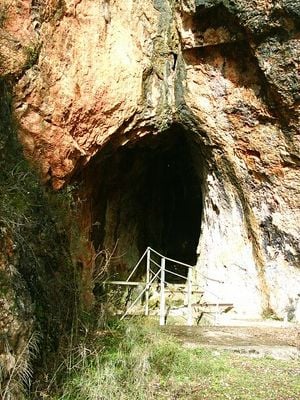
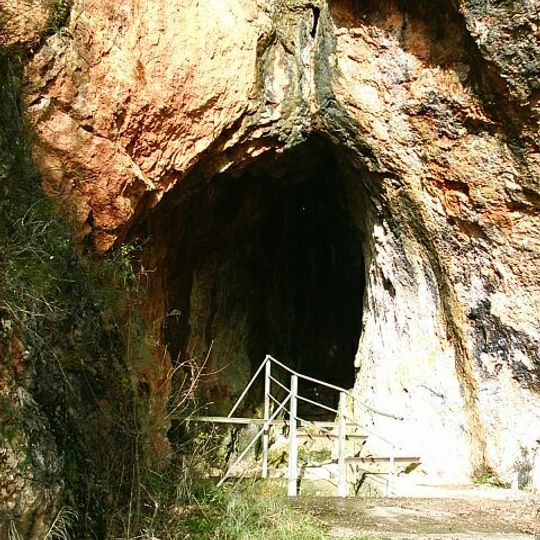
Tito's Cave lies on the slope of Gradina hill, about 23 metres above the Unac river and 1 km from Drvar's centre. Its entrance, 6 m wide and 7 m high, was widened artificially to fit barracks; a levelled 18 m platform in front holds two barracks 12 m and 4 m long. Inside, a horizontal channel 16 m long leads to iron doors installed in 1938 for water-supply exploration; the cave is 85 m long and ends in a siphon lake 53 m below those doors.
On 6 January 1944 the Supreme Staff of the NOV and POJ, the Central Committee of the KPJ and AVNOJ bodies moved from Jajce to Drvar, and a barracks was built inside the cave for the staff. On 25 May 1944, Tito's birthday, German paratroopers of Operation Rösselsprung attacked; Tito and the staff broke out around noon toward Ataševac and were flown from Kupreško polje to Bari.
The cave is part of the 25 May Museum complex, which also includes the main museum building, Tito's villa and the building where the OZNA security department was formed. The museum opened in 1945 and once drew 200,000 visitors a year; about 7,000 exhibits were stolen, destroyed or burned in the 1992-1995 war.
The cave lies on the slope of Gradina hill, about 23 m above the Unac riverbed and 1 km from Drvar town centre. A levelled plateau 18 m long in front of the entrance holds two barracks, 12 m and 4 m long and 5 m wide. Inside, a horizontal channel 16 m long has boards laid along it for easier viewing; iron doors installed in 1938 stand at its end.
The cave's entrance, 6 m wide and 7 m high, was artificially widened to fit barracks; a leveled plateau 18 m long in front holds two barracks of 12 m and 4 m. Inside, an iron door installed in 1938 for water-supply research still stands at the end of the 16 m horizontal channel.
The community of curious travelers
AroundUs brings together thousands of curated places, local tips, and hidden gems, enriched daily by 93,849 contributors worldwide.