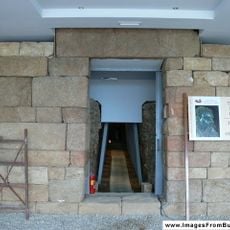
Ostrusha mound, Archaeological museum in Kran, Bulgaria
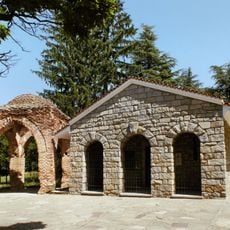
Ostrusha mound is an ancient burial complex featuring six chambers constructed from granite blocks, with a central room containing painted wall surfaces and multiple connecting passages. The structure displays carefully worked stone and spatially organized areas that reflect the complexity of the burial ritual.
Built in the middle of the 4th century BCE, the complex served as a temple of the Thracian god Sabazios until the 4th century CE. It was erected in stages, marked by a silver Apollonian obol and two coins of Philip II of Macedon. In the early Byzantine era the mound became a Christian necropolis, and excavations in 1993 found coins of Constantine the Great and a rare Persian silver coin.
The wall paintings depict a Thracian noblewoman adorned with gold ornaments, reflecting the artistic traditions of this ancient region. Visitors can still observe these colored scenes today, which reveal how people of that time valued beauty and craftsmanship.
The complex lies in the southern periphery of the mound, with its entrance cut on the south side and facing south. The central chamber sits on a three-step stereobate, and the six rooms open off a first space that served as a distribution point to the east, west and north chambers. The northeast and northwest rooms are smaller and have no entrances; access was probably by stairs.
A side chamber contained silver horse ornaments, including a headpiece with engraved patterns that may have been used in ceremonies. These delicate metal objects offer rare insights into craftsmanship and the possible function of burial gifts.
The community of curious travelers
AroundUs brings together thousands of curated places, local tips, and hidden gems, enriched daily by 94,443 contributors worldwide.