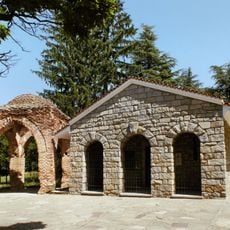
Thracian tomb Helvetia, Ancient Thracian tomb in Shipka, Bulgaria.
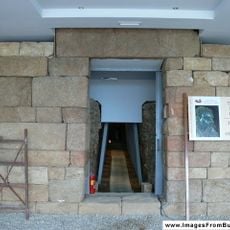
The Helvetia tomb is an ancient Thracian burial monument with a long corridor system leading to a rectangular antechamber and burial chamber. The structure uses large stone blocks and iron clamps, featuring an intricately designed ceiling that combines different architectural styles.
The tomb was built in the middle of the 4th century BC, though Georgi Kitov dated the burial to the late 5th or early 4th century BC. It was excavated on 26 July 1996 during the TEMP expedition led by Kitov, as part of the Shushmanets mound necropolis near Shipka.
The mound is part of the Shushmanets necropolis in the Valley of the Thracian Kings. A horse skeleton lay in anatomical order in the antechamber, and another in front of the east wing of the dromos, where a bronze cheek-piece was found. Georgi Kitov dated the burial to the late 5th or early 4th century BC.
The tomb lies in the Shushmanets mound necropolis on the southern edge of Shipka, in the Valley of the Thracian Kings. The entrance corridor is wide and long, built of differently sized blocks on clay mortar, and leads to a rectangular chamber and antechamber under a shared corbel vault. The chamber's stone door locked from the inside; the ritual stone bed faces the entrance.
The horizontal band breaking the vaulted ceiling marks the shift from double-pitched to semi-cylindrical roofing in Thracian chamber architecture. The walls of the antechamber and chamber carry a thin plaster coating modelled in relief to imitate masonry; where it has fallen away, painted walls show at least two periods of use, as Georgi Kitov noted.
The community of curious travelers
AroundUs brings together thousands of curated places, local tips, and hidden gems, enriched daily by 93,654 contributors worldwide.