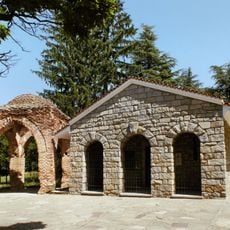
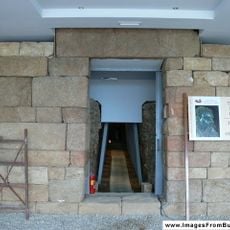
Svetitsa mound, Archaeological site and museum in Shipka, Bulgaria.
Svetitsa mound is a Thracian burial tumulus near the town of Kran in Kazanlak municipality. Beneath the mound, a built grave was found containing a gold mask weighing 673 grams, a gold ring with a youth's image, armour, two swords, two amphorae, two jugs with red-figure decoration, a silver cup, a bronze hydria and a clay cup. The grave dates to the second half of the 5th century BC.
The mound was excavated in 2004 by a team led by Georgi Kitov. The brick-built grave dates to the second half of the 5th century BC, based on two red-figure vessels imported from Athens. The finds, including a 673-gram gold mask thought to depict Teres I, are now in the National Archaeological Museum in Sofia.
The mound takes its name from a nearby spring that locals call Svetitsa. The grave held two red-figure vases made in Athens, showing links between Thracian rulers and Greek workshops. The gold mask, weighing 673 grams, is thought to depict a Thracian ruler, possibly Teres I.
The open-air museum sits in a rural area and is easily explored on foot. It is best to wear comfortable shoes and be ready for uneven ground conditions.
The gold mask found in the tomb weighs 673 grams and shows the face of a man, thought to be the Thracian ruler Teres I. Two red-figure vessels made in Athens date the grave to the second half of the 5th century BC. The finds are kept in the National Archaeological Museum in Sofia.
The community of curious travelers
AroundUs brings together thousands of curated places, local tips, and hidden gems, enriched daily by 93,786 contributors worldwide.