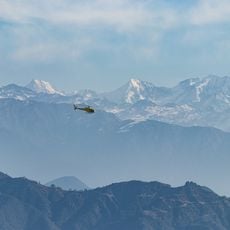
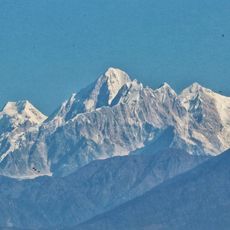
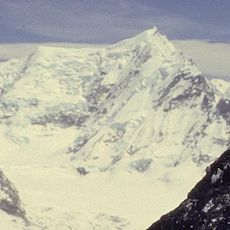
Kangpenqing, Mountain summit in Tibet, China
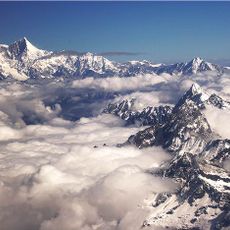
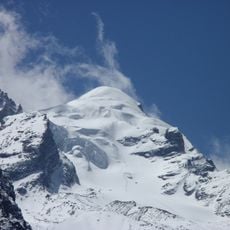
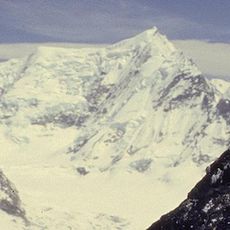
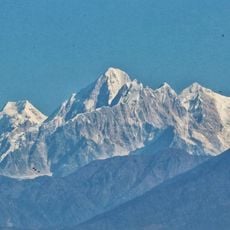
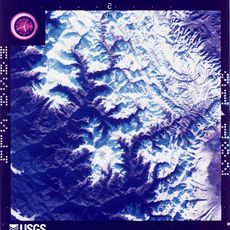
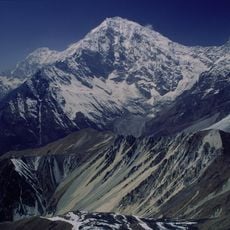
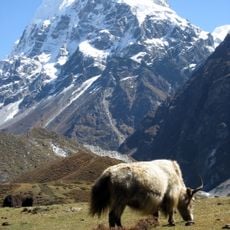
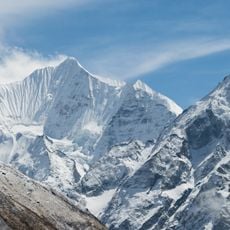
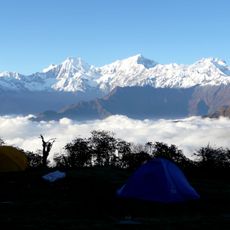
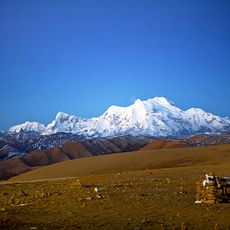
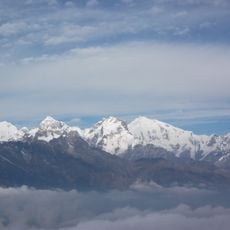
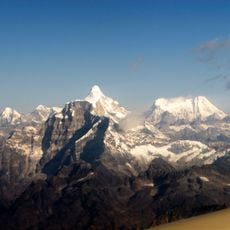
Kangpenqing is the highest summit of the Baiku Kangri massif, a spur that branches northwest from the main Himalayan chain northwest of Shishapangma in Tibet. Sources give its elevation between 7,211 and 7,299 m, with 7,281 m commonly cited. The mountain is also recorded as Gang Benchen, Kang Benchen and Kangboqen.
Kangpenqing was first climbed on 1 April 1982 by eight members of a Japanese expedition: Riyuko Morimoto, Kozo Matsubayashi, Kazunari Ushida, Shim Koshima, Takao Morito, Goro Hitomi, Kiyoshi Nakagawa and Hiroshi Kondo. The next day Shoichiro Ueo, Takashi Nishiyama and Rikuyo Morimoto also reached the summit. The mountain is the highest point of the Baiku Kangri massif, which branches northwest from the main Himalayan chain beyond Shishapangma.
Kangpenqing is the highest point of the Baiku Kangri massif, a spur that branches northwest from the main Himalayan chain northwest of Shishapangma. Its name appears in many spellings, including Gang Benchen, Kang Benchen, Kangboqen and Kangpengqing, and sources give heights between 7,211 and 7,299 m.
Kangpenqing lies in the Baiku Kangri massif, a spur branching northwest from the main Himalaya northwest of Shishapangma. The 1982 Japanese expedition climbed it in early April, reaching the summit on 1 April, with three more climbers following on 2 April. Approach and permit arrangements are handled through the Chinese authorities for Tibet; no route details are recorded in the sources.
Kangpenqing is the highest point of the Baiku Kangri massif, a spur that branches northwest from the main Himalayan chain beyond Shishapangma. Sources give its height anywhere from 7,211 to 7,299 m, and its name appears in many spellings, among them Gang Benchen, Kangboqen and Kangpengqing.
The community of curious travelers
AroundUs brings together thousands of curated places, local tips, and hidden gems, enriched daily by 93,468 contributors worldwide.