Miaoying Temple, Buddhist temple in Xicheng District, China
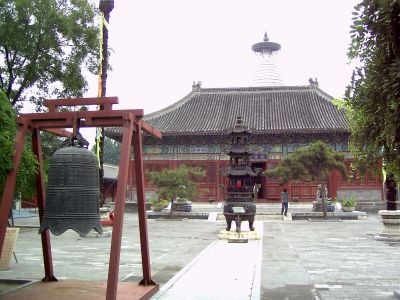
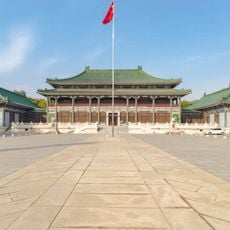
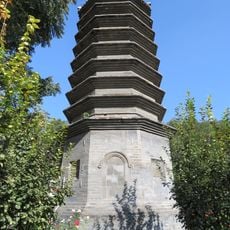
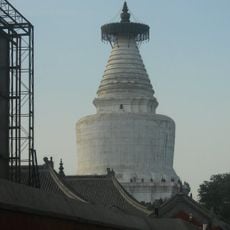
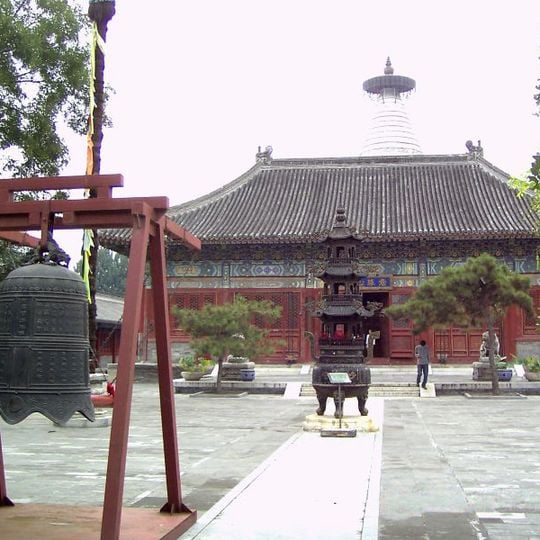
Miaoying Temple, also called the White Stupa Temple, stands on the north side of Fuchengmennei Street in Xicheng District. Its white bell-shaped stupa, the oldest and largest Tibetan Buddhist pagoda in China, rises above the roof of a hall with red walls and a dark grey tiled hip-and-gable roof. The courtyard holds a large bronze bell on a red frame and a tiered bronze incense burner on a white stone base.
The temple was founded in 1279 by Emperor Kublai Khan as a site for Buddhist ceremonies. Its construction occurred during a period of great cultural blending between Chinese and Mongolian traditions.
The temple is also called Baita Si, or White Stupa Temple, after its white pagoda. Since the Qing dynasty, worshippers have walked clockwise around the stupa, especially on the fourth day of the sixth lunar month and the twenty-fifth day of the tenth lunar month, said to be the stupa's completion day. Lamas once circled it three times with chanting and music.
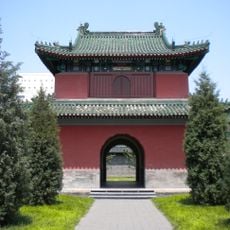
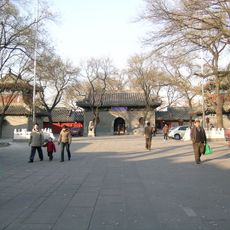
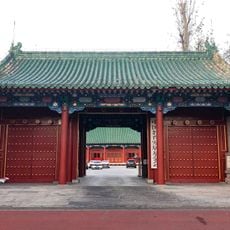
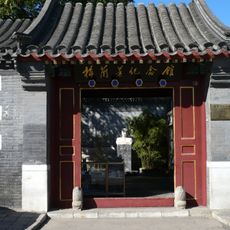
Miaoying Temple is entered through a small side door on the east side, since the original gate and bell-drum towers were demolished in 1969. The halls and the stupa courtyard are visited on foot along a single axis, and the White Stupa is seen from the temple courtyards rather than from the street.
The Nepali craftsman Arniko, a disciple of Phags-pa, had impressed Kublai Khan by repairing a bronze statue before being put in charge of the White Stupa, completed in 1279. The stupa's original carvings, including animals on the base and images of the five Buddhas on the dome, have weathered away over the centuries.
The community of curious travelers
AroundUs brings together thousands of curated places, local tips, and hidden gems, enriched daily by 93,896 contributors worldwide.