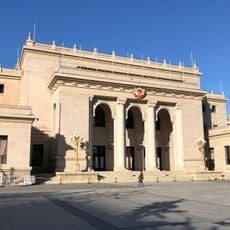
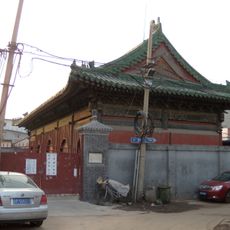
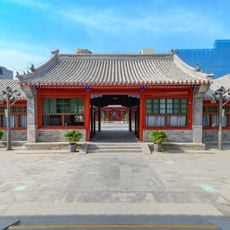
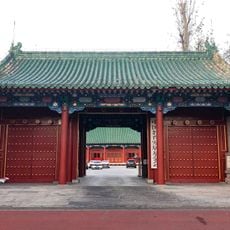
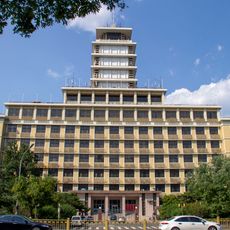
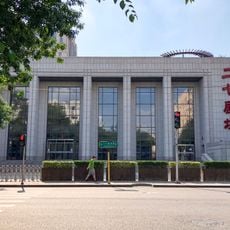
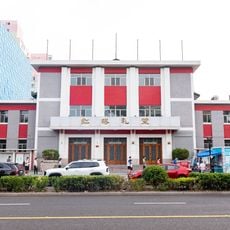
Beijing Lu Xun Museum, Literary museum in Xinjiekou Subdistrict, Beijing, China.
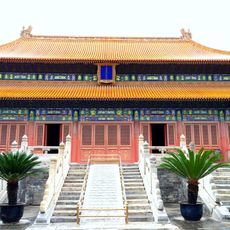
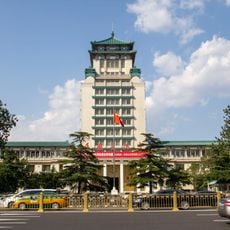
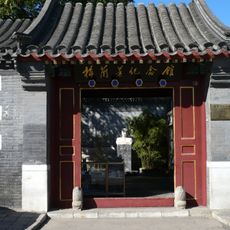
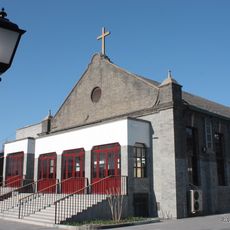
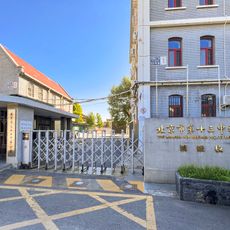
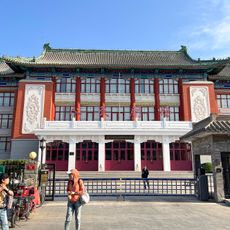
The Beijing Lu Xun Museum is a museum in the Xinjiekou Subdistrict of western Beijing dedicated to the writer Lu Xun, displaying manuscripts, photographs, letters, and personal objects. The site combines a purpose-built exhibition hall in traditional Chinese architectural style with the original courtyard house where the writer lived.
Lu Xun designed and rebuilt the courtyard house himself in spring 1924 and lived there until August 1926, writing parts of 《彷徨》 and 《朝花夕拾》. In 1947 underground party members had the house sealed by the Beiping High Court to protect it. It opened to the public on 19 October 1949, and the museum, built alongside, opened on 19 October 1956. The residence was listed as a Beijing protected site in 1979 and a Major Historical and Cultural Site Protected at the National Level in 2006.
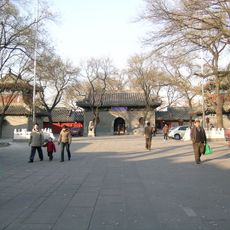
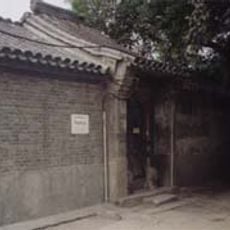
The small courtyard house where Lu Xun actually lived is part of the site, and visitors can walk through his study and bedroom as they were during his time in Beijing. The space gives a sense of how he worked and spent his days in a modest, ordinary setting.
The museum sits in the western part of the city and is easy to reach by metro or bus, with several stops nearby. Visiting both the exhibition hall and the original house together takes around one to two hours for most people.
The jujube trees Lu Xun mentions in his essay "Autumn Night" stood not in his own yard but in the neighbouring courtyard at Hengsi Tiao 3. Four grew there; the westernmost was hidden by a house and the easternmost had long been cut down, so from his study he could see only two. The last were cut or died out by the 1940s, and none can be seen from the house today.
The community of curious travelers
AroundUs brings together thousands of curated places, local tips, and hidden gems, enriched daily by 93,973 contributors worldwide.