Zhalan Cemetery, Historical cemetery in Xicheng District, China
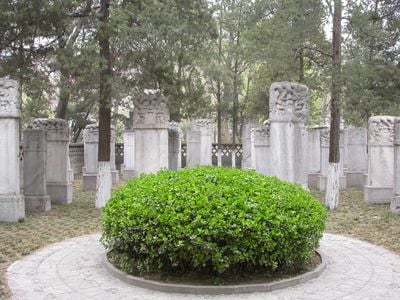
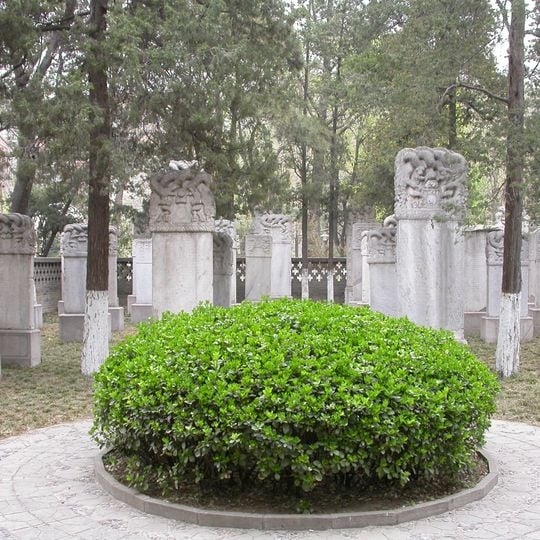
Zhalan Cemetery is a former Jesuit burial ground on the grounds of the Beijing Administration Institute. A row of tall grey stone steles with carved ornamental caps stands in grass among trees with white-painted trunk bases; a large rounded shrub partly hides the line. Three steles face the graves: Matteo Ricci in the centre, Johann Adam Schall von Bell and Ferdinand Verbiest on either side.
The cemetery was founded during the Ming dynasty when Emperor Wanli authorized a burial ground for Jesuit missionary Matteo Ricci in 1610. This decision created a place where Chinese and Western presences came together.
Each tombstone carries a dragon framing the christogram of the Society of Jesus, with the epitaph in Latin on the left and Chinese on the right. Ricci's stone reads "Tomb of the Jesuit Li Gong" and gives his name, style, homeland of Italy, and the years he entered China and died. The name Zhalan comes from the fence that once enclosed the garden of Duke Teng.
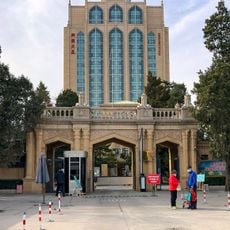
The cemetery lies inside the grounds of the Beijing Administration Institute at 6 Chegongzhuang Dajie, Xicheng District, so entry follows the institute's gate arrangements rather than a public park entrance. Ricci's stele stands in the western section, facing the graves, with Schall von Bell on the left and Verbiest on the right; some sixty further original steles are set in a fenced area to the east. The site is a protected cultural relic, so walking is confined to the open ground between the stones.
In the late 1970s, Deng Xiaoping personally ordered the reconstruction of Matteo Ricci's grave, showing how important this place was to Chinese history. This careful restoration made the grave a symbol of recognizing this cultural connection.
The community of curious travelers
AroundUs brings together thousands of curated places, local tips, and hidden gems, enriched daily by 93,799 contributors worldwide.