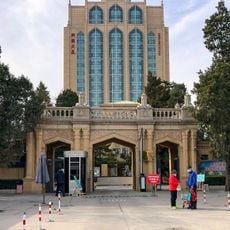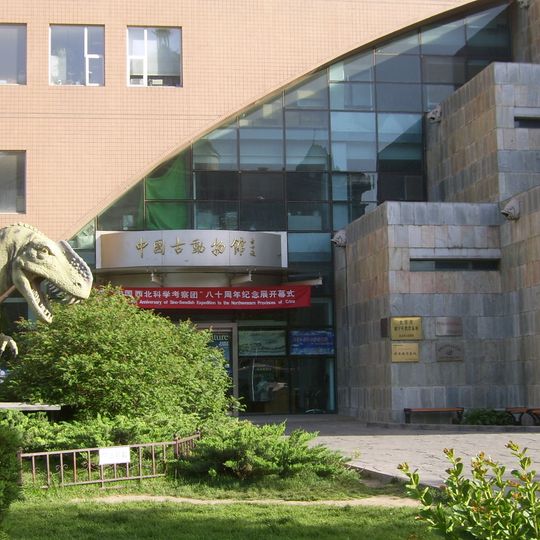
Paleozoological Museum of China, Natural history museum at Xizhimenwai Street in Beijing, China
The Paleozoological Museum of China is a natural history museum in Beijing with two main exhibition halls filled with fossils and reconstructed skeletons. The collection spans over one thousand specimens of vertebrate animals and human ancestry findings from different geological periods.
The museum was founded in 1929 and originally called the Museum of Paleoanthropology before adopting its current name. The institution evolved from focusing on human prehistory to encompassing a comprehensive collection of prehistoric animal life.
The museum displays fossils from Chinese excavation sites and shows how scientists track the evolution of life across millions of years. Visitors encounter finds that have shaped our understanding of human prehistory.
The museum sits next to the Beijing Planetarium and is easy to reach on foot. The exhibition is structured in a visitor-friendly way, with informational labels in both Chinese and English.
The third floor displays rare mammoth finds, including well-preserved tusks and remains of woolly mammoths from the ice age. These specimens come from excavations in Mongolia and show life in prehistoric landscapes.
The community of curious travelers
AroundUs brings together thousands of curated places, local tips, and hidden gems, enriched daily by 92,058 contributors worldwide.