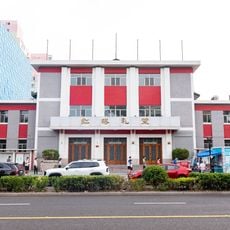
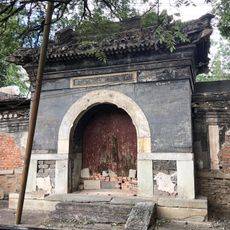
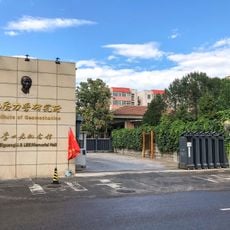
Institute of Vertebrate Paleontology and Paleoanthropology, Paleontology research center in Beijing, China
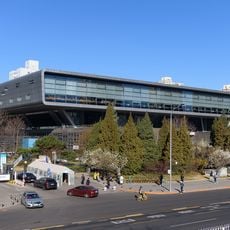
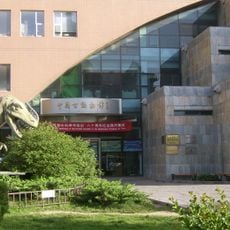
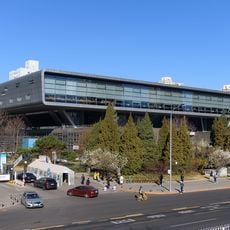
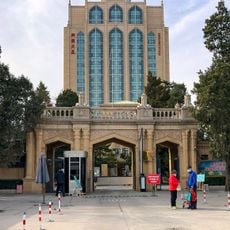
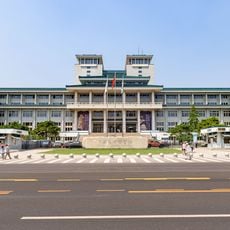
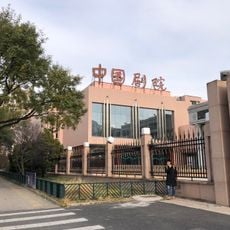
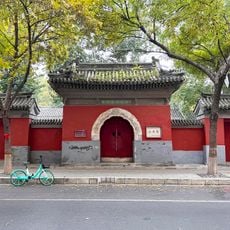
The Institute of Vertebrate Paleontology and Paleoanthropology in Beijing is a research facility dedicated to studying fossils of ancient animals from fish to dinosaurs. Its collections contain thousands of skeletons and skulls that are systematically documented and analyzed in laboratories and exhibition spaces.
The institute was founded in 1929 as the Cenozoic Research Laboratory and later developed into a leading center for vertebrate paleontology under the Chinese Academy of Sciences. Over the decades it built extensive fossil collections that made it one of the most important institutions for understanding how life evolved.
The institute draws students and researchers from around the world to study ancient life. Visitors can observe how scientists from different backgrounds collaborate to understand the evolution of vertebrates through their fossil collections.
The facility is located in central Beijing and is accessible by public transportation. Most information at the institute is in Chinese, so it is helpful to research details in advance or bring a guide to fully understand the displays.
The institute grew out of the Cenozoic Research Laboratory founded in Beijing in April 1929. Its researchers took part in the China-Canada Dinosaur Project from 1986 to 1991 and authored or co-authored 45 articles in Nature and Science between 1999 and 2005. Yang Zhongjian (C. C. Young), Dong Zhiming, Meemann Chang and Zhao Xijin have all worked here.
The community of curious travelers
AroundUs brings together thousands of curated places, local tips, and hidden gems, enriched daily by 92,784 contributors worldwide.