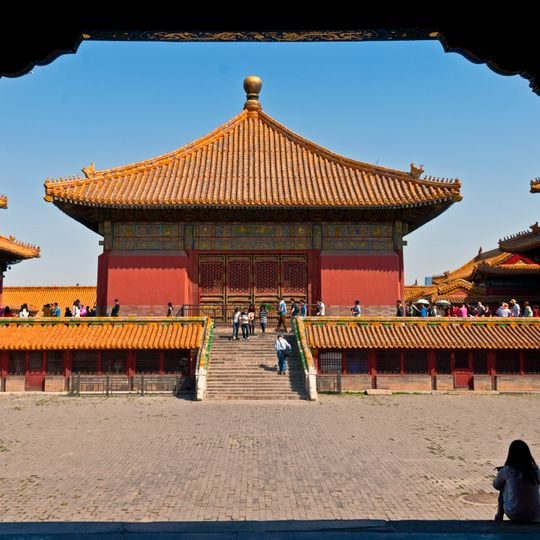
Hall of Union, Imperial hall in the Forbidden City, Beijing, China
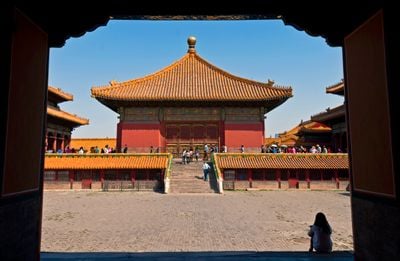
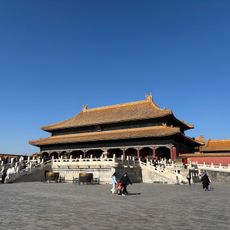
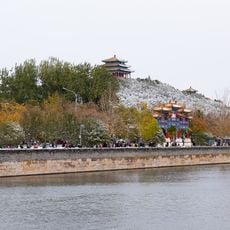
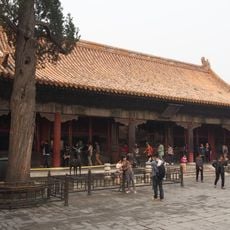
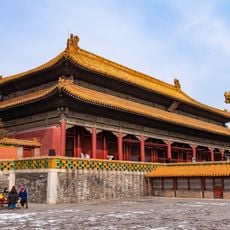
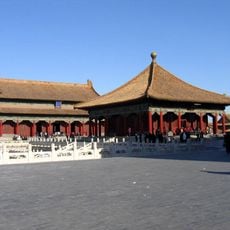
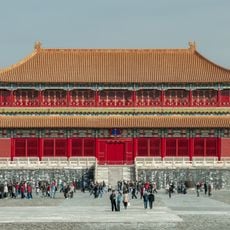
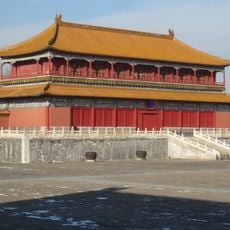
The Hall of Union is an imperial pavilion in the Forbidden City positioned between the Palace of Heavenly Purity and the Palace of Earthly Tranquility. The square structure with a pyramidal roof houses a bronze water clock from 1745 and a mechanical clock from 1798, both originally used for timekeeping during palace activities.
The hall was built before the Jiajing reign of the Ming dynasty; the Ming History records it standing behind the Palace of Heavenly Purity, and it was first called the Central Round Hall, modelled on Nanjing's Shenggong Hall. It was rebuilt in 1655 and 1669 under the Qing, burned when the Palace of Heavenly Purity caught fire in 1797, and was rebuilt the same year.
The hall served as the setting for imperial ceremonies where the empress received formal greetings from high-ranking court ladies during important festivals. These gatherings reflected the strict hierarchy and role of women within the imperial household.
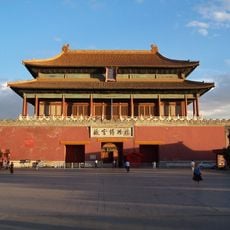
The pavilion is easy to locate within the larger complex since it sits directly between two major halls and is visible from outside. Plan time to examine the clock mechanisms and architectural details, especially during morning light when visibility is best.
The 25 seals were not all jade: the set kept in this hall also included gold and sandalwood examples, stored in boxes covered with yellow silk. The Qianlong Emperor chose them in 1746 from an original 39, and the empty boxes still stand in five groups around the throne.
The community of curious travelers
AroundUs brings together thousands of curated places, local tips, and hidden gems, enriched daily by 93,956 contributors worldwide.