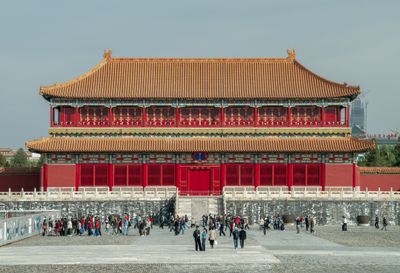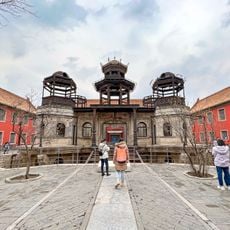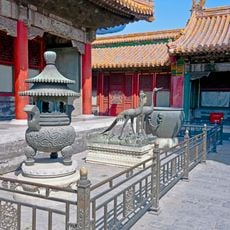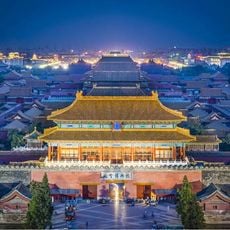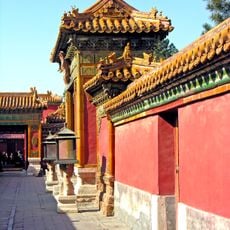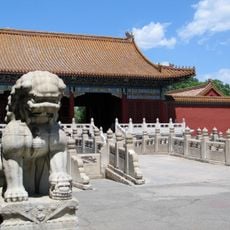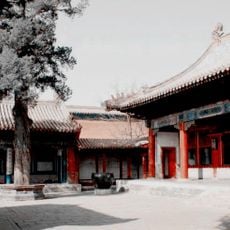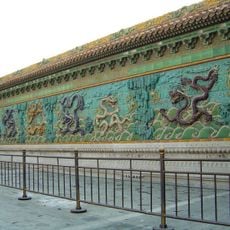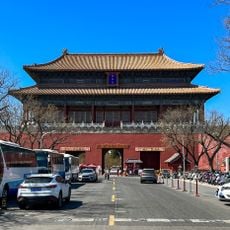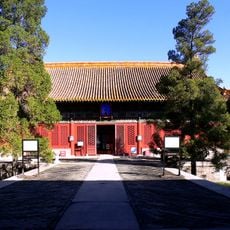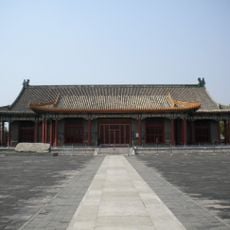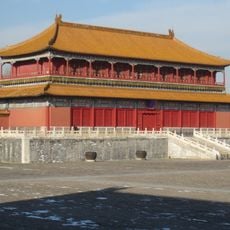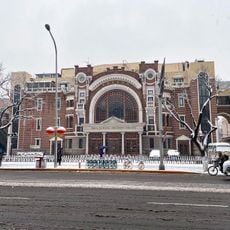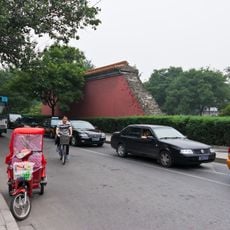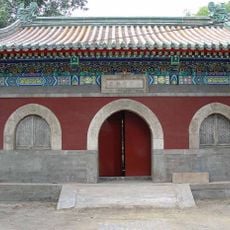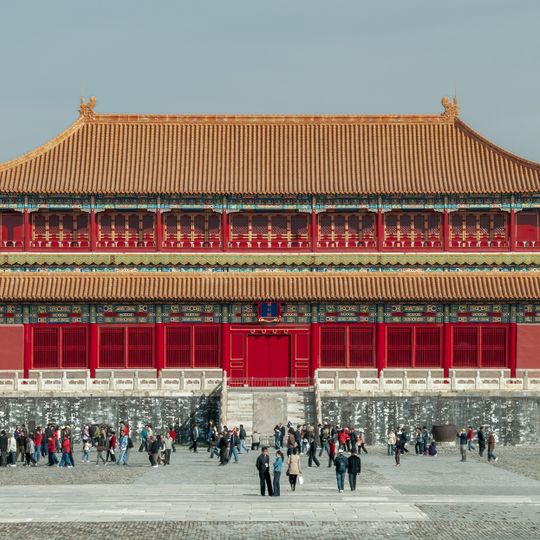
Belvedere of Embodying Benevolence, Imperial pavilion in Forbidden City, Beijing, China.
The Belvedere of Embodying Benevolence is a two-story pavilion with yellow glazed roof tiles and nine bays spanning its lower level. The upper floor contains seven sections connected by surrounding corridors, while the ground level features double-leaf doors and ornate wooden window frames.
The pavilion was first built in 1420 during the Ming Dynasty under Emperor Yongle as Wen Tower and later reconstructed in 1783 following a fire. This rebuilding shaped the structure into its current form.
During the Kangxi period, the pavilion served as a venue for poetry exhibitions where scholars from both inside and outside the imperial court gathered.
The site is relatively flat and easy to walk through, though stairs connect the two levels and may be challenging for older or less mobile visitors. Early morning or late afternoon visits are best to experience the space with fewer crowds.
Twenty-four square columns support the structure through an ingenious system of decorative brackets that distribute weight while maintaining architectural balance. This blend of craftsmanship and engineering reflects a hallmark of classical Chinese construction.
The community of curious travelers
AroundUs brings together thousands of curated places, local tips, and hidden gems, enriched daily by 91,723 contributors worldwide.