East Glorious Gate, Gatehouse at Forbidden City, China
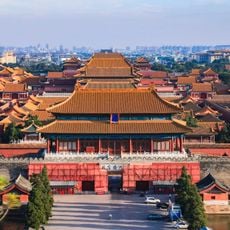
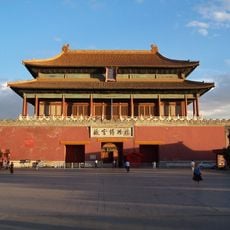
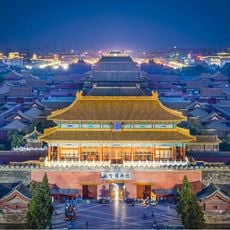
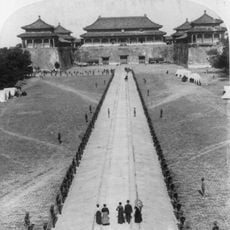
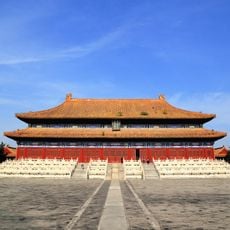
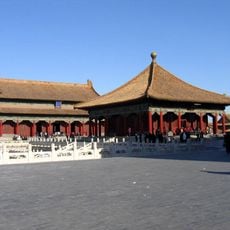
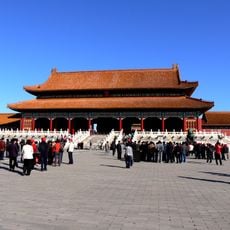
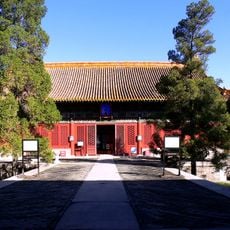
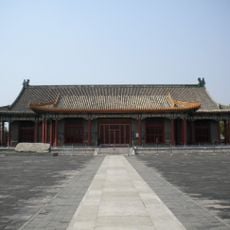
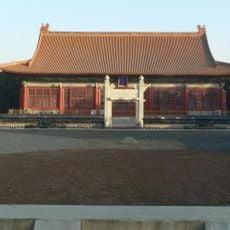
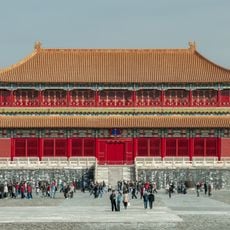
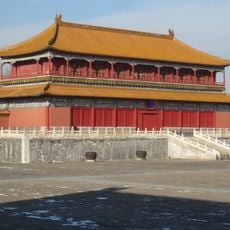
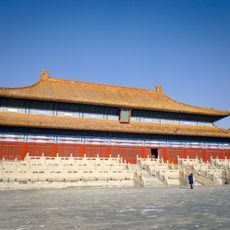
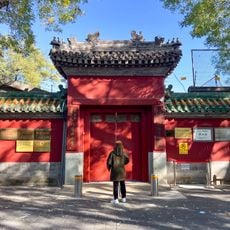
The East Glorious Gate is the eastern gate of the Forbidden City, set in the southern part of the east wall. It faces east toward the West Glorious Gate and has a red platform on a white marble base with three arched passages, each square outside and round inside. The gate tower above has a double-eaved hip roof of yellow glazed tiles, five bays wide and three deep, with a surrounding veranda and ink-line gold-spin painting on its beams.
The gate was built in 1420 during the Ming Dynasty as part of the Forbidden City's defensive system. Its construction formed part of a larger building phase that shaped the entire eastern side of the complex.
The gate's name combines 'east' with 'hua', meaning glorious or splendid, marking its position on the eastern wall. In the Qing dynasty, the coffins of deceased emperors, empresses and empress dowagers were carried out of the Forbidden City through this gate, so people called it the 'Ghost Gate'. Its eight rows of nine door nails, unlike the nine rows on other main gates, are popularly linked to this funerary use.
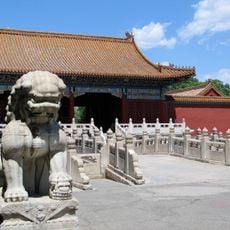
The gate now serves as a visitor exit from the Palace Museum, the second after the Gate of Divine Prowess. From the Meridian Gate, visitors can walk the wall past the southeast corner tower to reach it, looking down on the stone carvings of the former Imperial Insignia Guard site along the way.
The gate differs from typical palace gate decoration and displays eight rows of door nails rather than the standard nine rows. This variation reveals subtle design choices made for different entrances throughout the complex.
The community of curious travelers
AroundUs brings together thousands of curated places, local tips, and hidden gems, enriched daily by 93,104 contributors worldwide.