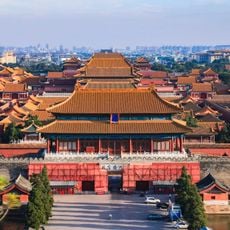
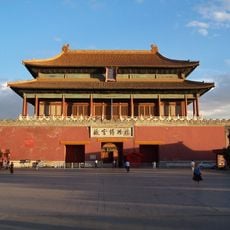
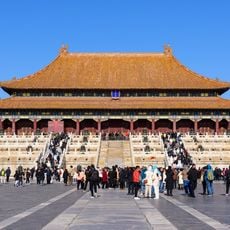
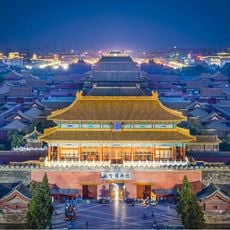
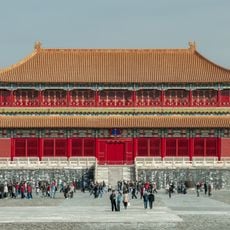
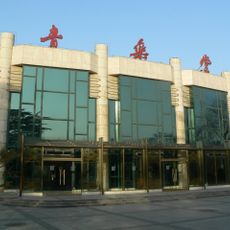
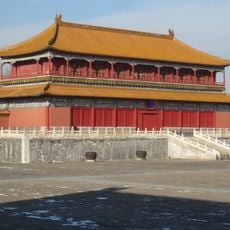
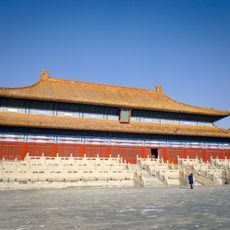
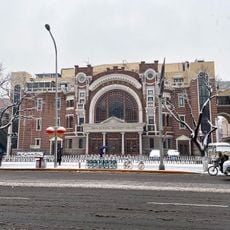
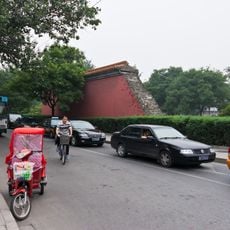
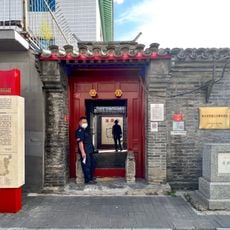
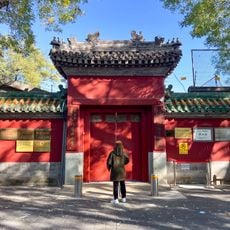
Pudu Temple, Buddhist temple in Dongcheng District, China.
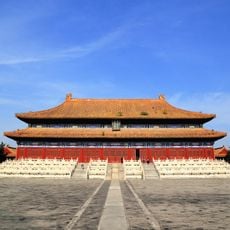
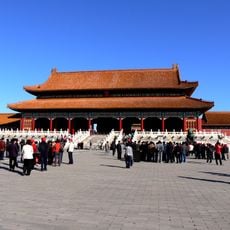
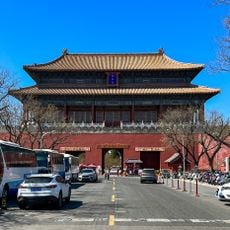
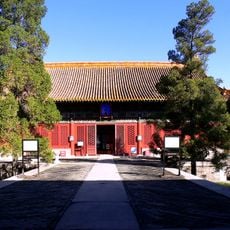
Pudu Temple stands on a brick platform about 3 metres high, the base of the Ming Chonghua Palace bedchamber. Its main hall, Ciji Hall, sits on a stone sumeru pedestal with Ming carvings; the hall has seven bays, a three-bay porch and a single-eaves hip roof with green glazed tiles. The gate house has three bays and green glazed tiles of higher rank than the hall.
The site was the Chonghua Hall of the Ming dynasty Eastern Garden, where Emperor Yingzong was held after his return from the Tumu crisis; it was destroyed at the end of the Ming. In the early Shunzhi reign a new hall was built as the Rui Prince residence of regent Dorgon, whose title was stripped in 1651. In 1694 the southern part became a silk store and the northern part the Mahakala temple; the Qianlong Emperor named it Pudu Temple in 1776.
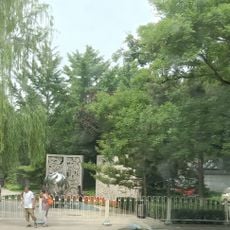
The temple is no longer an active place of worship. Since 2011 the Sansan Art Museum has rented the gate and main hall, while the garden area remains free and open to the public. The gate's interior preserves gilded dragon-and-seal paintings from the Rui Prince residence period.
The temple stands at 35 Pudu Temple Front Alley, east of Nanchizi Street near the Donghua Gate of the Forbidden City. The gate, the Ciji Hall and the abbot's quarters survive; the hall itself has been closed to the public since the tax museum moved out. The garden area remains free to enter.
The temple's main hall stands on a brick platform about 3 metres high, built on the base of the Ming Chonghua Palace's sleeping quarters. In the southeast corner of the porch is a stone-lined pit 4.8 metres across and about 1.5 metres deep, reached by steps, its rim carved with waves, deities and monsters; its purpose is still debated, possibly a Manchu shamanic ritual feature.
The community of curious travelers
AroundUs brings together thousands of curated places, local tips, and hidden gems, enriched daily by 93,608 contributors worldwide.