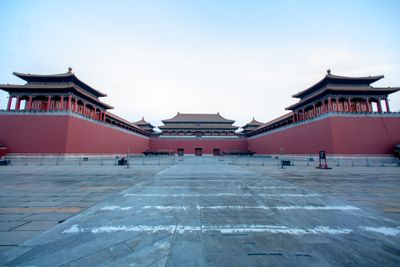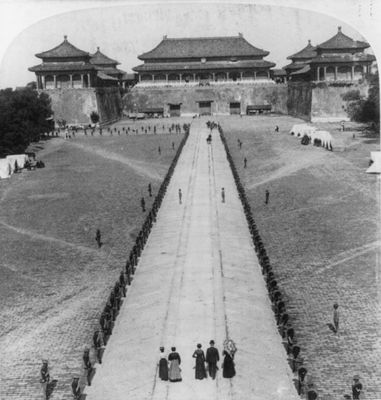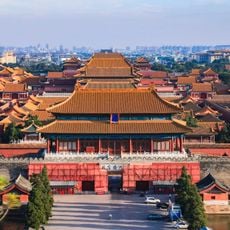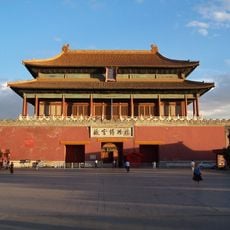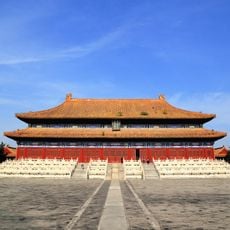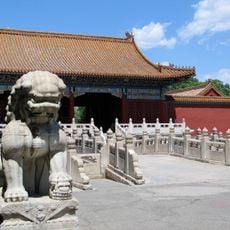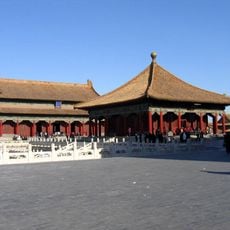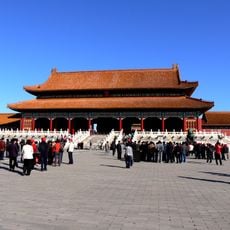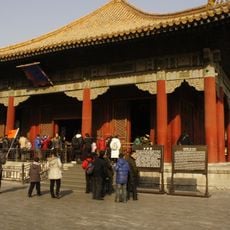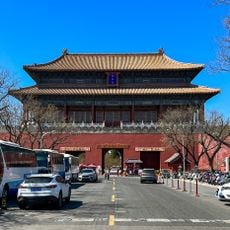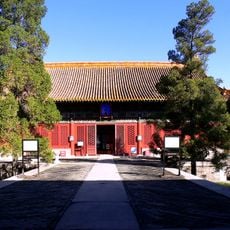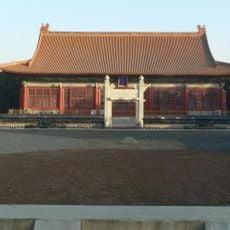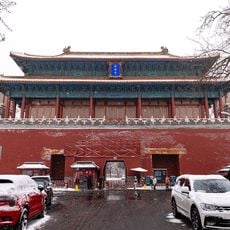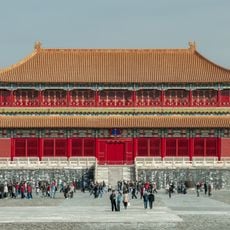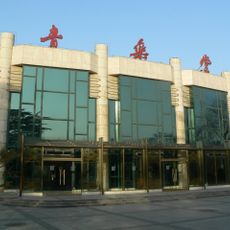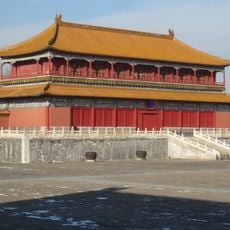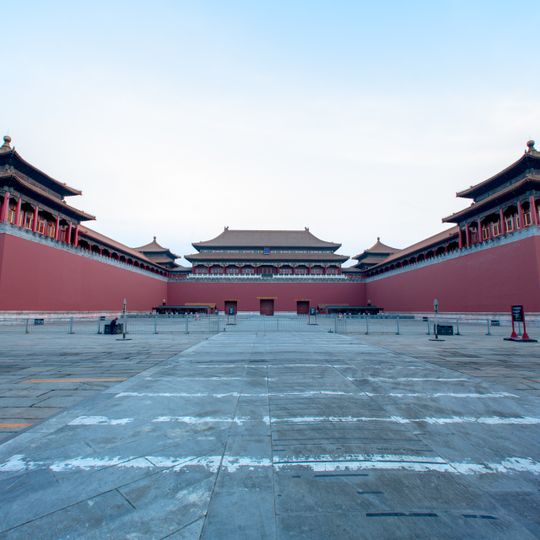
Meridian Gate, Main entrance gate of Forbidden City, Beijing, China
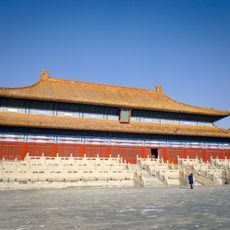
The Meridian Gate (Wumen) is the southern and largest gate of the Forbidden City in Beijing. Its plan is a concave "U" shape: a 12-meter-high base pierced by three central arches and two flanking side arches ("three visible, five hidden"), topped by a nine-bay double-eaved pavilion flanked by 13-bay single-eaved wings (Yanchi Lou) ending in pyramidal-roofed pavilions. The wings derive from ancient que towers.
Built in 1420 under the Ming Yongle emperor, the gate was repaired in 1647 under the Qing Shunzhi emperor and again in 1801 under the Jiaqing emperor. Imperial proclamations and the annual almanac were issued from here, and after victorious campaigns the emperor received prisoners of war in front of it. During the Ming, officials were flogged here in the tingzhang punishment, which gave rise to the false saying "beheading at Wumen".
The central arch was reserved for the emperor; the empress could pass through it once, on her wedding day, and the top three scholars of the triennial examinations exited through it. Officials used the east side arch, imperial kinsmen the west, and the two flanking arches opened only for large events.
The Meridian Gate is the only entrance visitors may use to enter the Palace Museum, and its south side faces Tiananmen through the Upright Gate and Duanmen. The gate stands at the south end of the Forbidden City's central axis, so walking north from Tiananmen Square brings you to it. The ticket office is not at the gate itself; the gatehouse now holds exhibition halls reached after entering.
During the Ming Dynasty, officials who disrespected imperial rules received physical punishment called "Tingzhang" in front of this gate. This practice demonstrated how discipline and obedience were enforced within the imperial hierarchy.
The community of curious travelers
AroundUs brings together thousands of curated places, local tips, and hidden gems, enriched daily by 93,685 contributors worldwide.