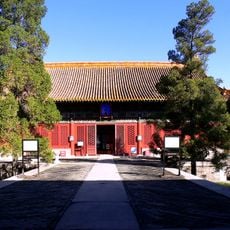
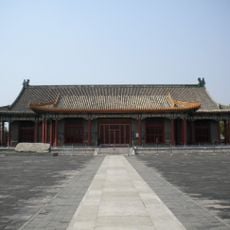
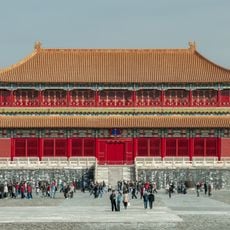
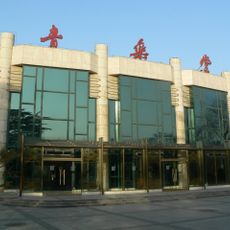
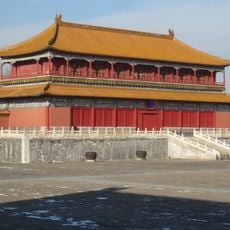
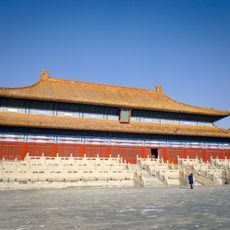
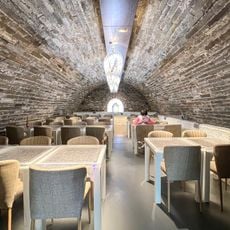
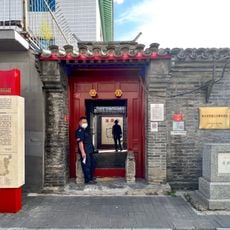
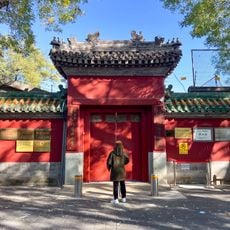
Hall of Military Prowess, Imperial building in Forbidden City, Beijing, China
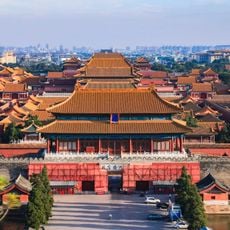
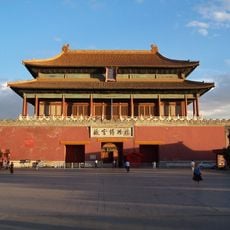
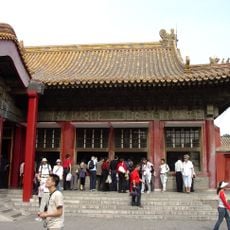
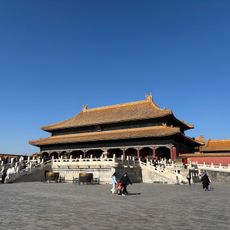
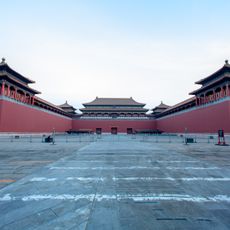
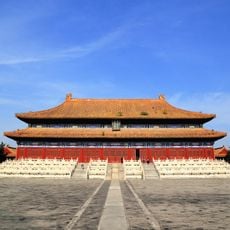
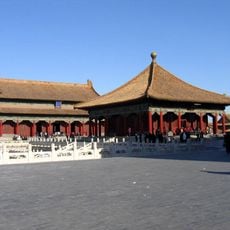
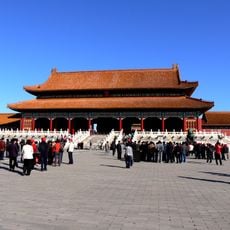
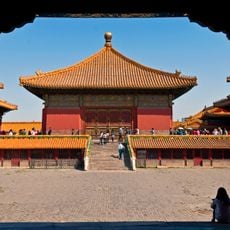
The Hall of Military Prowess (Wuying Dian) stands in the western section of the Forbidden City, built in 1420 under the Yongle Emperor and paired with the Hall of Literary Brilliance to the east. Its main hall and rear Jingsi Hall are linked by a covered corridor; the timber frames and bracket sets of the gate and halls differ, indicating the gate predates the 1869 fire. Since 2008 the halls have housed the Palace Museum's painting and calligraphy gallery.
During the Ming dynasty, the building served as an imperial painting studio before becoming an administrative office for regent Dorgon in the early Qing period. Under Emperor Kangxi, it later became a center for scholarly work and court arts.
The name comes from a Ming-era studio where the court kept painters chosen for their skill, and the hall later housed the imperial printing office. Since 2008 its rooms have served as the Palace Museum's painting and calligraphy gallery, showing works from the Jin to the Qing dynasties in rotating displays.
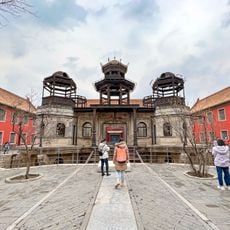
The hall stands in the western part of the Forbidden City, south of the inner Golden Water River and west of the outer porcelain store. Since 2008 it has housed the museum's painting and calligraphy gallery, with rotating displays in the hall and rear hall. The 2002–2004 restoration kept the Republican-era windows and the 1954 timber corridor.
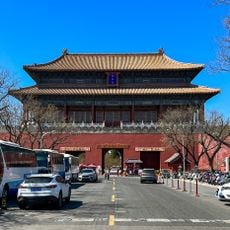
The hall was gutted by a fire in 1869 that destroyed 37 rooms and all stored printing blocks; it was rebuilt the same year. Its gate, Wuyingmen, may predate that fire, while the side galleries date to the Ming. In 1914 it became the first part of the Forbidden City opened to the public.
The community of curious travelers
AroundUs brings together thousands of curated places, local tips, and hidden gems, enriched daily by 93,960 contributors worldwide.