Imperial Ancestral Temple, Imperial ancestral shrine in Donghuamen, Beijing, China
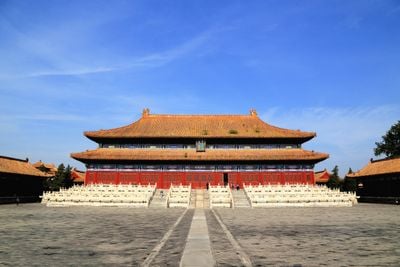
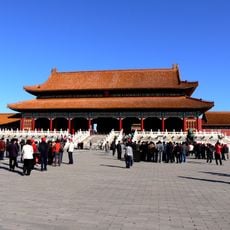
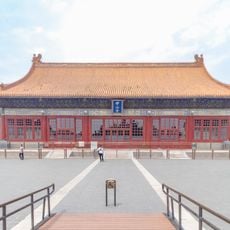
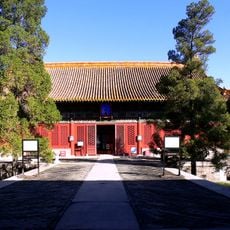
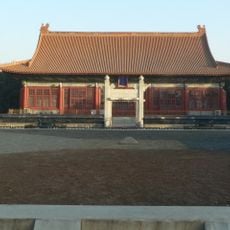
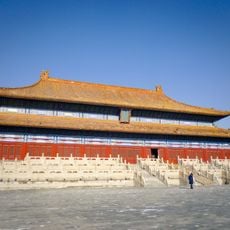
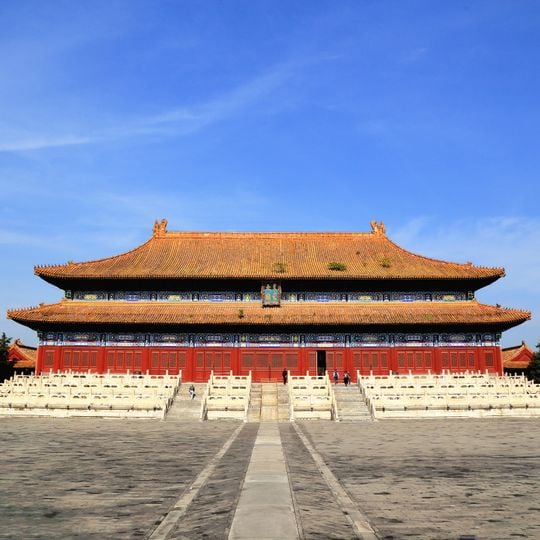
The Imperial Ancestral Temple is a walled complex of three courtyards on a north-south axis east of Tiananmen. Its main hall, the Hall for Worship of Ancestors, stands on a three-tiered white marble platform, measures 68.2 m by 30.2 m and rises 32.46 m, with a double-eaved roof of yellow glazed tiles and beams of nanmu wood.
Construction began in 1420 during the Ming Dynasty, making it a central site for imperial ceremonies for centuries. The temple remained in use throughout the Qing Dynasty and retained its importance until the end of imperial rule.
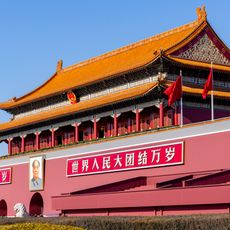
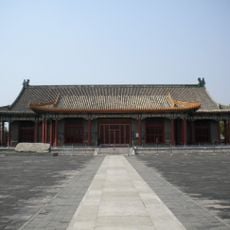
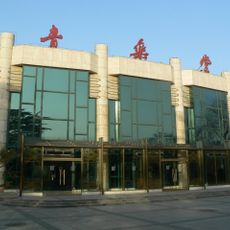
The name Taimiao means "Grand Temple"; the main hall, the Xiangdian, hosted the year-end heji sacrifice, when the emperor honoured all imperial ancestors together. The east and west wings held tablets of Ming and Qing princes and of meritorious officials such as Xu Da and Oboi's rival Songgotu's kin; disgraced officials could be removed, as Heshen's brother Helin was in 1799. Since 1950 the site has served as the Working People's Cultural Palace, and in 2016 the main hall hosted its first fashion show.
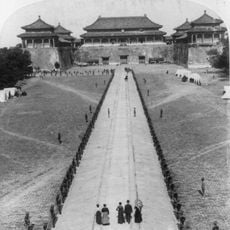
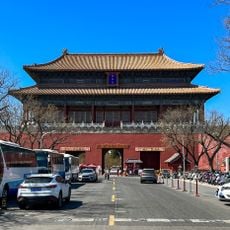
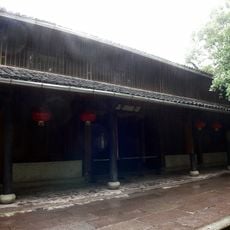
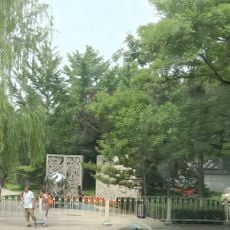
The main visitor entrance is the south gate, opened when the site became a park; the original west-south street gate is split and used as shops, so it cannot be entered. Three concentric walls enclose the halls, with seven stone bridges between the ornamental gate and the halberd gate. The grounds cover 139,650 square metres, so allow time to walk between the three courtyards.
The Hall for Worship of Ancestors is 32.46 m high and 68.2 m wide, built entirely of golden nanmu wood, with a ceiling and pillars decorated in gold-leaf patterns. Its three-tiered white marble base, 3.46 m tall, is matched in Beijing only by a handful of buildings.
The community of curious travelers
AroundUs brings together thousands of curated places, local tips, and hidden gems, enriched daily by 92,777 contributors worldwide.