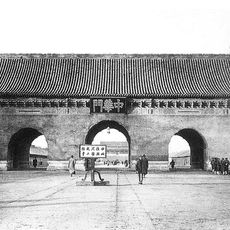
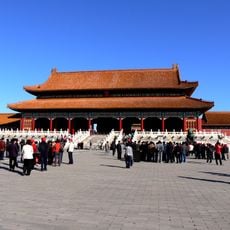
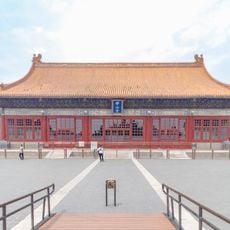
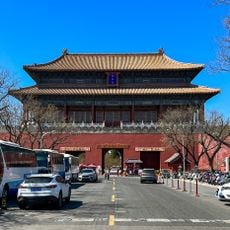
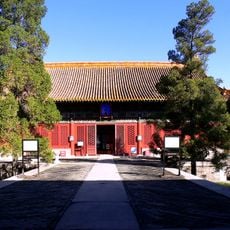
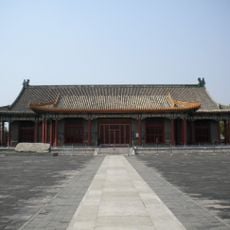
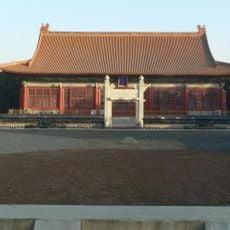
Tiananmen, Imperial gate in Dongcheng District, China.
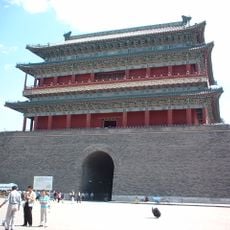
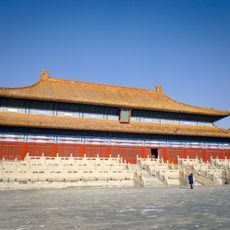
Tiananmen is a gate in Dongcheng District, Beijing, that rises 32 meters high and extends 66 meters wide with red walls. The structure marks the southern entrance to the Forbidden City and has five passageways, with the central one formerly reserved for the emperor.
Built in 1420 as Chengtianmen, the gate burned down in 1457 and was rebuilt in 1465 as a gatehouse. Rebels under Li Zicheng burned it in 1644; the Qing rebuilt it from 1645 and renamed it Tiananmen in 1651. Between 1969 and 1970 it was secretly dismantled and rebuilt with earthquake resistance and modern facilities.
The gate's name means "Gate of Heavenly Peace", shortened from a phrase about receiving heaven's mandate and pacifying the dynasty. The two placards read "Long Live the People's Republic of China" (west) and "Long Live the Great Solidarity of the World's Peoples" (east); the eastern one originally read "Long Live the Central People's Government" until 1950. Both were switched to simplified characters in 1964.
Security checks take place before entering the square, so visitors should allow extra time for waiting. Several subway stations are nearby and provide direct access to the area around the gate.
The gate appears on the national emblem of China and serves as an official symbol on government buildings across the country. During special occasions, huge red lanterns hang from the sides of the gate and create a festive mood in the square.
The community of curious travelers
AroundUs brings together thousands of curated places, local tips, and hidden gems, enriched daily by 93,127 contributors worldwide.