Gate of Supreme Harmony, Imperial gate in the Forbidden City, Beijing, China
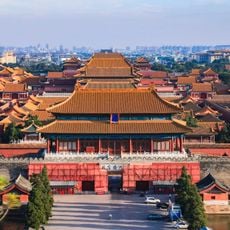
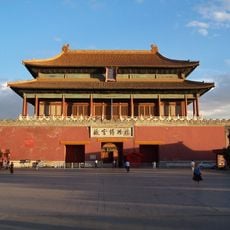
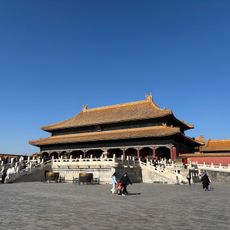
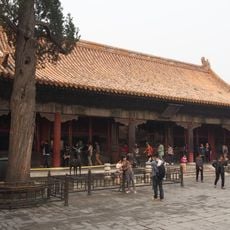
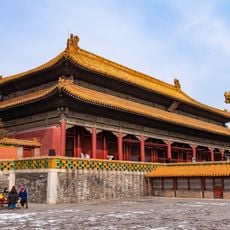
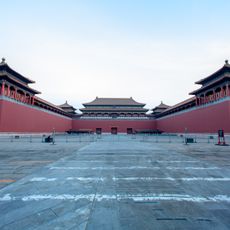
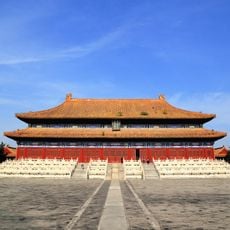
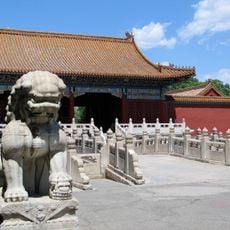
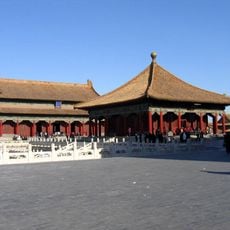
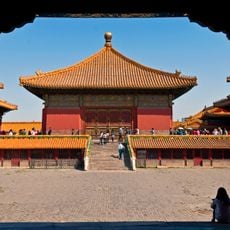
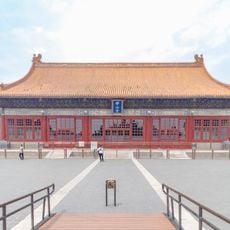
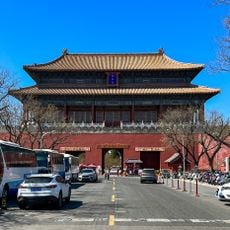
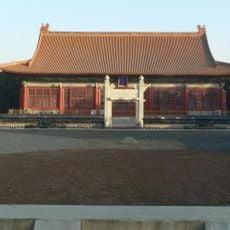
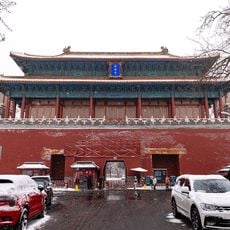
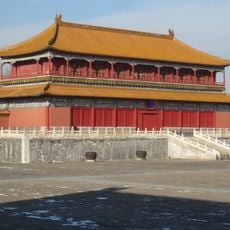
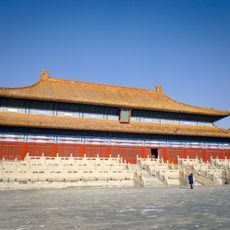
The Gate of Supreme Harmony is the largest gate of the Forbidden City and its outer-court front gate, built on a white marble base with a double-eaved hip-and-gable roof. It stands 23.8 m tall, seven bays wide and three deep, with a central stairway once reserved for the emperor and a pair of Ming bronze lions before it.
Built in 1420 as Fengtianmen, the gate was renamed Huangjimen in 1562 and took its current name in 1645. In 1644 the Shunzhi Emperor issued a general amnesty here. A fire in the guard room in January 1889 destroyed the gate, Zhendu and Zhaode; it was rebuilt the same year.
The five marble bridges crossing the Inner Golden Water River in front show the careful design of imperial ceremony and court hierarchy. Only the central passage belonged to the emperor, while officials and visitors used the outer walkways.
This gate serves as the main passage between the outer entrance area and the three major ceremonial halls beyond it. All visitors walk the same routes today, though understanding the historic layout helps you appreciate how the space was once strictly controlled.
The gate's bronze lions are among only six pairs of their kind in the imperial city, and the four bronze tripods in front of them were cast in the Ming dynasty. The gate itself is the largest palace gate in the Forbidden City, 23.8 metres tall.
The community of curious travelers
AroundUs brings together thousands of curated places, local tips, and hidden gems, enriched daily by 94,047 contributors worldwide.