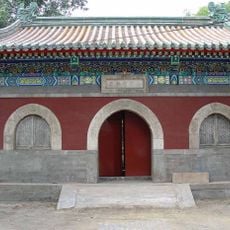
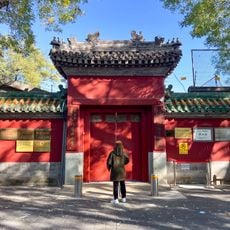
Fuyou Monastery, Buddhist temple in Xicheng District, China.
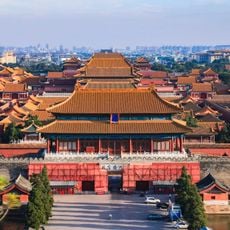
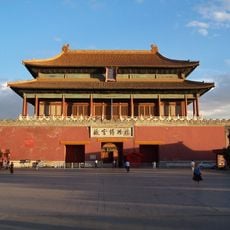
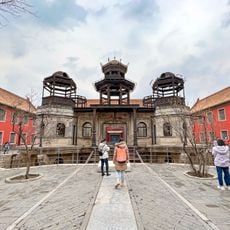
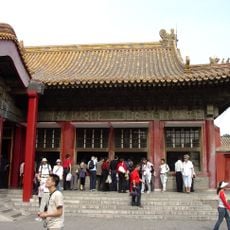
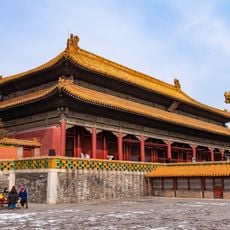
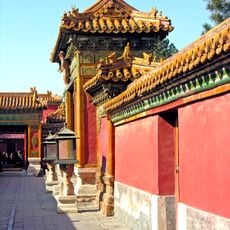
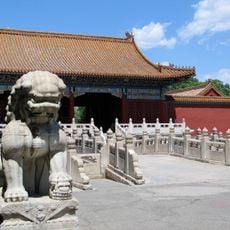
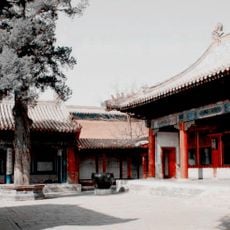
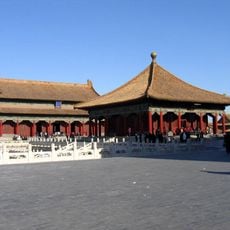
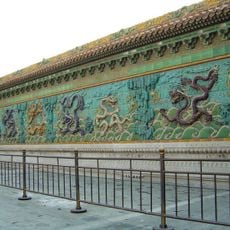
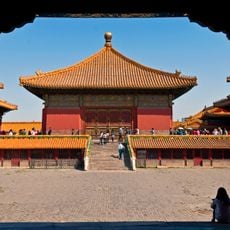
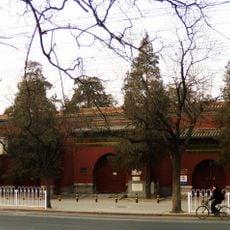
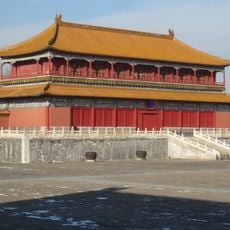
Fuyou Monastery is a Gelug Tibetan Buddhist temple at 20 Beichang Jie, outside the Forbidden City's Xihua Gate. It faces south behind a west-facing outer gate, with three courtyards, yellow glazed tiles and red walls. A glazed screen wall over 18 metres long stands south of the gate, and a pair of Qing stone lions flanks the entrance.
Fuyou Monastery was first built between 1644 and 1661 as a smallpox isolation residence for the young Kangxi Emperor, who is also said to have studied there. In 1723 the Yongzheng Emperor planned it as a princely residence for the future Qianlong Emperor, who never moved in. After Qianlong's accession the building was converted into a Tibetan Buddhist lamasery and named Fuyou Temple. In 1786 the 17th Ajia Hutuktu of Kumbum Monastery was ordered to manage its affairs.
The temple is closed to the public, so no ceremonies are held for visitors. Its name, Fuyou, means "blessing and protection". The grounds once housed the China Nationalities Museum, founded in 1984, and the temple has been a Beijing municipal cultural relic since the same year.
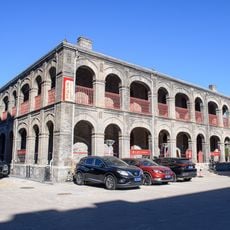
The temple is located on Beichang Jie street in Xicheng District and currently has restricted public access. Visitors can explore the exterior and view the buildings from outside, especially while walking through the surrounding neighborhood.
The monastery is part of a group of eight temples scattered around the Forbidden City that form an important part of Beijing's religious architecture. Together these temples created a historical network of worship sites that shaped the city over centuries.
The community of curious travelers
AroundUs brings together thousands of curated places, local tips, and hidden gems, enriched daily by 93,955 contributors worldwide.