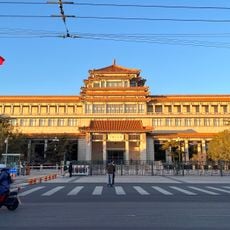
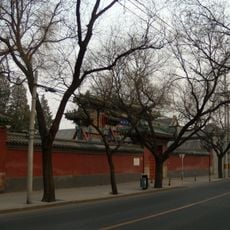
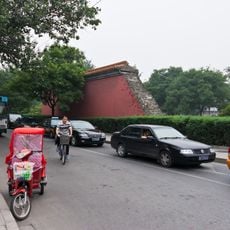
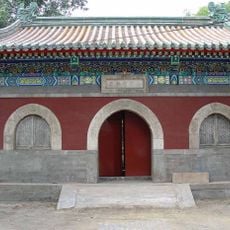
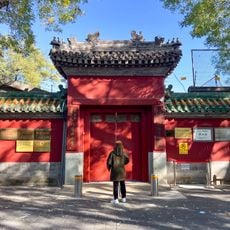
Site of the Imperial University of Peking, Educational heritage site in Jingshan Subdistrict, China.
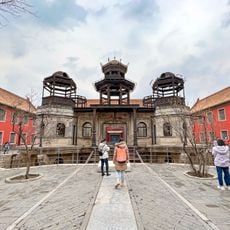
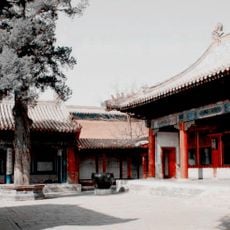
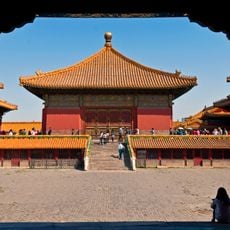
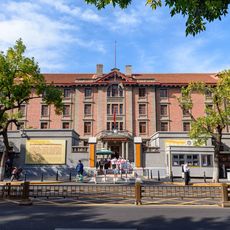
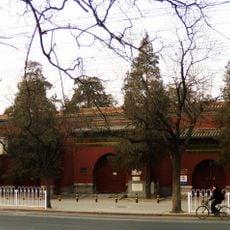
The site of the Imperial University of Peking, also called Peking University's Second Campus, occupies the former mansion of Princess Hejia, Qianlong's fourth daughter. Surviving Qing buildings include the main hall and the princess's courtyard, alongside a two-storey brick-and-timber mathematics building of 1904 (1,430 sq m) at 55 Shatanhou Street and the fourteen rows of single-storey dormitories known as Xizhai, also built in 1904.
The Imperial University of Peking was founded in 1898 through a royal decree by Emperor Guangxu, marking China's shift toward modern higher education. This founding established the groundwork for today's Peking University and transformed how education developed across the nation.
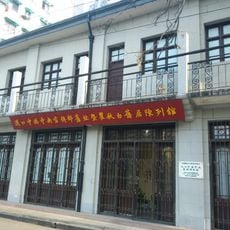
The grounds began as the residence of Princess Hejia, Qianlong's fourth daughter, before becoming the Imperial University of Peking. In 1920 two rooms of the Xizhai dormitory housed the Kangmuyi Studio, where the university's Marxist Research Society met. The name Xizhai, "Western Study," still labels the fourteen rows of single-storey dormitory blocks.
The remains stand at 55 Shatanhou Street in Dongcheng District, in the Jingshan Subdistrict. The surviving structures are split between the former princess's residence halls and the 1904 Mathematics Building and West Dormitory rows, so plan to walk between separate groups of buildings rather than one continuous site.
Two rooms in the West Dormitory became the Kangmuyi Studio in 1920, housing the Peking University Marxist Theory Research Society. The name is a Chinese rendering of "Communism", and the society's presence in a former Qing princess's mansion is easy to miss among the dormitory rows.
The community of curious travelers
AroundUs brings together thousands of curated places, local tips, and hidden gems, enriched daily by 93,119 contributors worldwide.