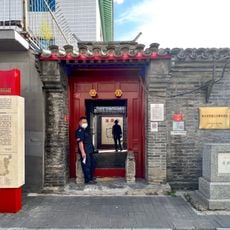
Publicity Department of the Chinese Communist Party, Central propaganda office in Beijing, China
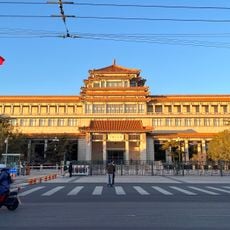
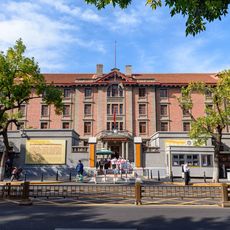
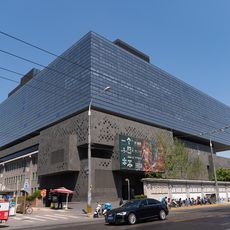
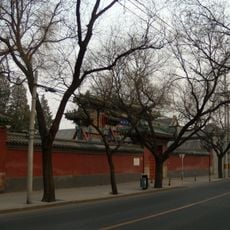
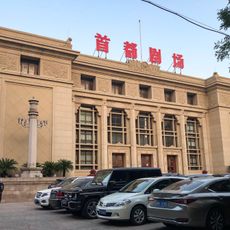
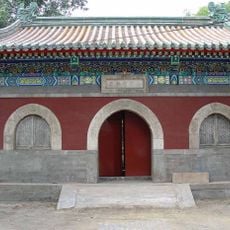
The Publicity Department of the CCP Central Committee occupies a building in Beijing whose left wing has a low, wide facade with a row of horizontal windows under layered roofs of dark red curved tiles with upturned eaves; a smaller tiered roof rises behind. The right wing is taller, with a vertical window grid set in light-colored rectangular stone panels and a steep red gable edged with a gold pattern. A dark hedge runs below.
The department was founded in May 1924, modelled on the Soviet Union's propaganda body, three years after the Party's 1921 First Congress. A 1941 Central Committee directive gave it leadership and review of newspapers and magazines, and from 1943 it implemented Party policy in literature, art and news. Abolished soon after the Cultural Revolution began, with its powers taken by the Cultural Revolution Group, it was re-established in October 1977 under minister Zhang Pinghua.
The office regulates film, television and literary publications and takes direct influence over artistic productions and newsrooms across the country. Publishers, film studios and journalists follow the guidelines issued by this bureau to align their work with national standards.
The department's inner operations are described in the sources as highly secretive, so the building is not open to visitors; it can only be seen from the street. Look for the light stone panels, the low wing with horizontal windows under dark red curved tiles, and the taller section with a vertical window grid beneath a steep red gable edged with a gold pattern.
The department maintains representatives and contacts in numerous countries to communicate Chinese viewpoints in international debates. These outposts work with local media organizations and organize cultural events to strengthen the country's presence abroad.
The community of curious travelers
AroundUs brings together thousands of curated places, local tips, and hidden gems, enriched daily by 92,735 contributors worldwide.