Palace of Heavenly Purity, Palace in the Forbidden City, Beijing, China
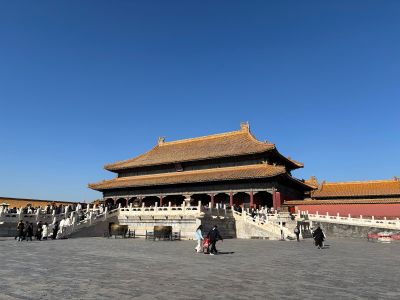
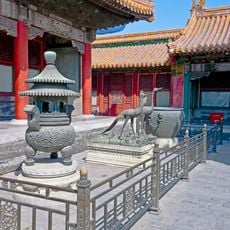
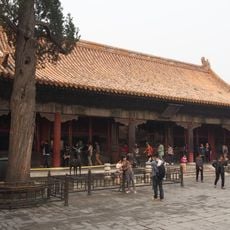
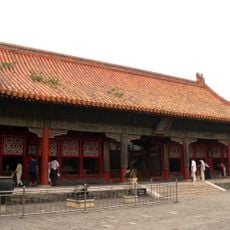
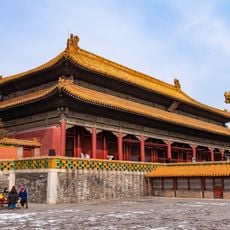
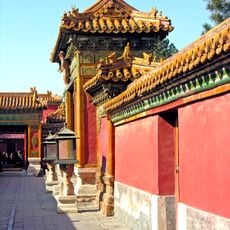
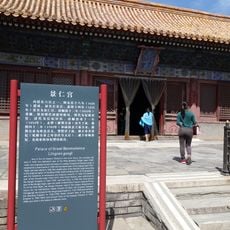
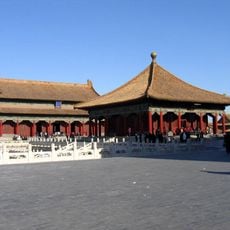
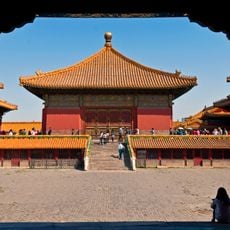
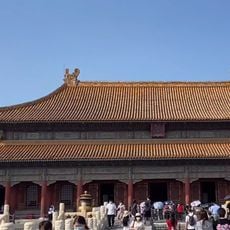
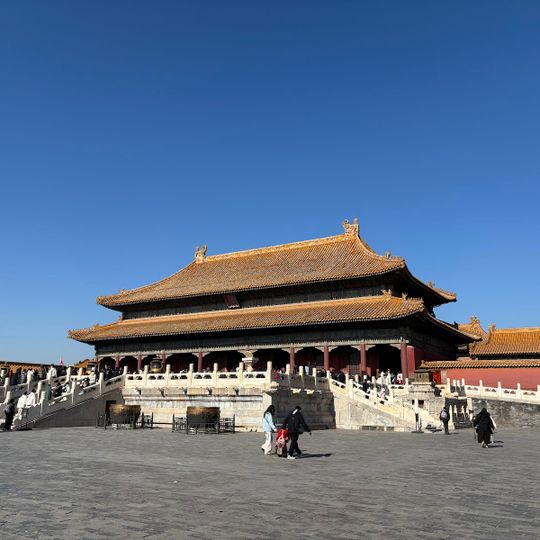
The Palace of Heavenly Purity is a single-storey hall with a double-eaved hipped roof of yellow glazed tiles, set on a white marble platform. Nine ridge figures sit on the roof, and a blue plaque with gold characters hangs below the upper eave. Red columns frame dark lattice doors, and bronze vessels stand on the stone railings in front.
Built in 1420, the palace burned in 1422 and was rebuilt by 1440. Fires in 1514, 1596 and 1797 led to reconstructions; the present structure dates from 1798. Ming emperors lived here until 1644, and the Yongzheng Emperor moved his residence to the Hall of Mental Cultivation, after which the hall served as an audience chamber.
The name comes from the I Ching: qian stands for heaven and qing for clarity, so Qianqing means 'heaven is clear'—order in the cosmos and in rule. Since 1798 the throne room has displayed the 'zheng da guang ming' tablet, written by the Shunzhi Emperor and re-copied by the Qianlong Emperor after the fire.
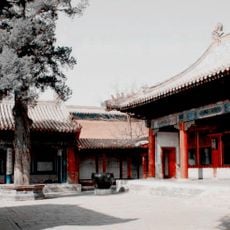
The hall stands on a single-level white marble terrace reached by a raised walkway from the Gate of Heavenly Purity to the south. The interior is viewed from the doorway; the throne, desk and the 正大光明 tablet above them are the focal points. The side halls along the courtyard now hold exhibition galleries.
The palace's name comes from the I Ching: qian stands for heaven and qing for clarity, so Qianqing means 'heaven is clear'—a reference to cosmic order. The name is paired with Kunning Palace, where kun means earth and ning means peace.
The community of curious travelers
AroundUs brings together thousands of curated places, local tips, and hidden gems, enriched daily by 93,838 contributors worldwide.