Chest opened
+${chestReward.xp} XP
Explorer
NOUVEAU ×${chestReward.collectible.quantity}
tapez pour fermer

See the monuments around you in AR Open chests in the app

Around Us is built for your phone — point your camera at the streets and discover the monuments and places around you in augmented reality. Around Us is built for your phone — chests unlock when you walk, explore and capture nearby places.

•

Enable Location

We need your location to show you interesting places around you

Discover nearby places

Find interesting locations and hidden gems around you

Precise directions

Get accurate directions and distances to places

Your location is never shared with other users. It's only used when you tap the location button.

Ninghe Temple

Log in to your account

Start exploring — it's free

Trusted by 93,091 travelers worldwide

Continue with Google
Continue with Apple
or

We will send you a code to connect

By continuing, you accept our Terms and Conditions and our Privacy Policy

Check your inbox

We've sent a pincode in your inbox. Please enter the code below.

Ninghe Temple

Ninghe Temple, Taoist temple in Donghuamen, Beijing, China

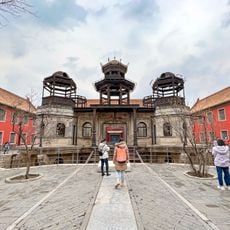
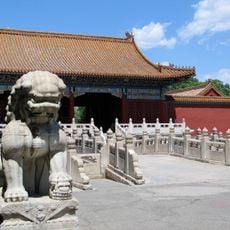
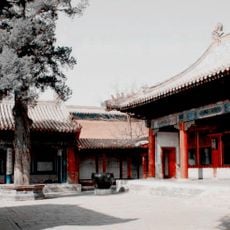
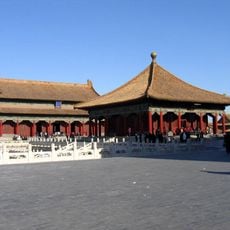
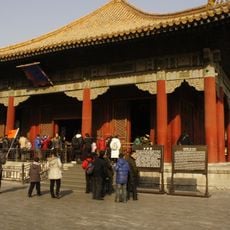
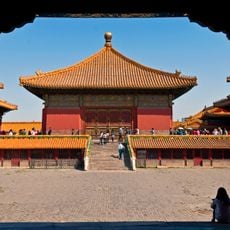
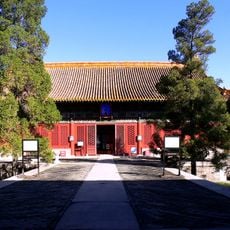
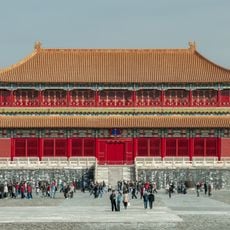
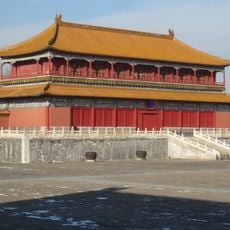
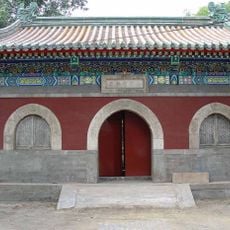
Ninghe Temple is a Qing-dynasty temple at 46 Beichizi Street, built in 1730 to honour the Cloud God and now used as a primary school campus. Its surviving halls run south to north: the gate with yellow glazed tiles and green borders, the offering hall with black glazed tiles, then the main hall with a carved dragon ramp before its steps, and the rear sleeping hall. The bell and drum towers were demolished in 1972.

The temple was built in 1730 during Emperor Yongzheng's reign in the Qing Dynasty. It belongs to a group of eight temples surrounding the Forbidden City and reflects Beijing's imperial religious landscape.

The temple's popular name, Yunshenmiao (Cloud God Temple), comes from its role in sacrifices to the cloud deity, and its main gate carries a plaque inscribed by Emperor Yongzheng reading "Xing Ze Zhao Cai". Since the Republican era the buildings have housed a primary school, now the Beichizi campus of Dengshikou Primary School.

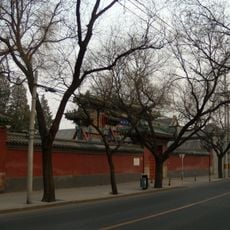
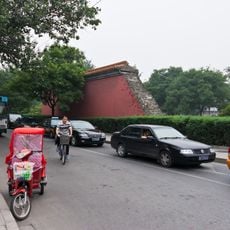
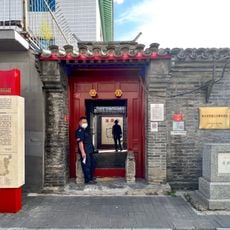
The temple stands at No. 46 Beichizi Street, on the east side of the road, facing west through a gate added later. It now serves as the Beichizi campus of Dengshikou Primary School, so the halls are not open to visitors; the gate and restored roofs can be seen from the street.

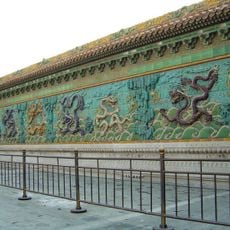
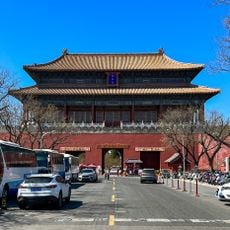
The temple's gate opens onto Beichizi Street through a side gate added later, facing west rather than south like the main axis. The original archways and a 22.9-metre glazed screen wall no longer stand.

The community of curious travelers

AroundUs brings together thousands of curated places, local tips, and hidden gems, enriched daily by 93,091 contributors worldwide.


Start exploring
Part of
Eight Temples around the Forbidden City
GPS coordinates
39.91787,116.39705
Latest update
October 28, 2026 17:57
Reviews
Share your experience

No review yet

Discussions
Start a discussion...

No discussion yet

« Ninghe Temple - Taoist temple in Donghuamen, Beijing, China » is provided by Around Us (aroundus.com). Images and texts are derived from Wikimedia project under a Creative Commons license. You are allowed to copy, distribute, and modify copies of this page, under the conditions set by the license, as long as this note is clearly visible.

Discover hidden gems everywhere you go!

From secret cafés to breathtaking viewpoints, skip the crowded tourist spots and find places that match your style. Our app makes it easy with voice search, smart filtering, route optimization, and insider tips from travelers worldwide. Download now for the complete mobile experience.

Around Us App Screenshot
❝

A unique approach to discovering new places❞

— Le Figaro

❝

All the places worth exploring❞

— France Info

❝

A tailor-made excursion in just a few clicks❞

— 20 Minutes

Around Us
Travel Guide & Maps
Download

Send to your phone

QR Code
1

Open the camera app on your mobile.

2

Point at the QR code with your camera. A notification will appear.

3

Tap the notification to open the link.