Hoi Tong Monastery, Buddhist monastery in Henan Island, Guangzhou, China
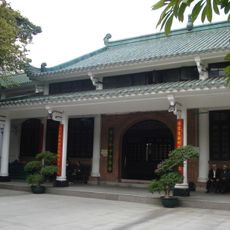
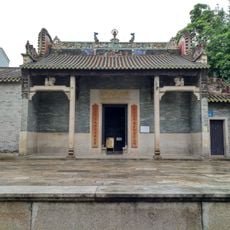
Hoi Tong Monastery is a Buddhist monastery on Henan Island in Guangzhou, sharing grounds with Haichuang Park. Its surviving halls, including the Mahavira Hall and the Tianwang Hall, face north toward the Pearl River. The Mahavira Hall houses three bronze Buddhas of the past, present, and future, each over 10 meters tall, cast around 1668. The grounds also contain a stone stupa and a 300-year-old eagle-claw orchid.
The monastery was first founded in the 10th century during the Southern Han dynasty, under the name Qianqiu Temple. Over the following centuries it grew into one of the most influential Buddhist centers in the Guangzhou region.
The name comes from the Indian monk Sāgaradhvaja, "Ocean Banner", who studies the Heart Sutra in the Flower Garland Sutra; Cantonese speakers say "Hoi Tong", and the "幢" is read tong4, not "tong" as in a building. A 300-year-old eagle-claw orchid (鹰爪兰) in the grounds is said to predate the temple, hence the saying "未有海幢,先有鹰爪". The male-form Guanyin and the Four Heavenly Kings, rebuilt after 1966, are among the images visitors stop at.
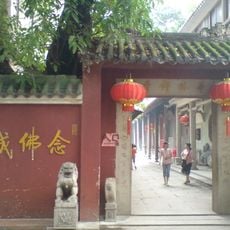
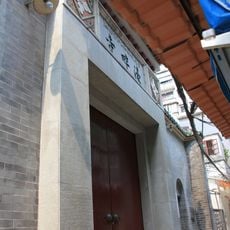
The monastery stands on the west side of Haichuang Park, facing the Pearl River to the north. The grounds are entered free of charge. The temple and the park are separated by a hedge, and the temple has no drum tower, mountain gate or paifang of its own, so look for the reconstructed gate and bell tower added from 2008.
The monastery once ran its own printing press dedicated to producing religious texts, which made it a notable center for spreading Buddhist writings across the region. The gardens also featured penjing sculptures shaped like boats and birdcages, an unusual choice for that art form.
The community of curious travelers
AroundUs brings together thousands of curated places, local tips, and hidden gems, enriched daily by 94,049 contributors worldwide.