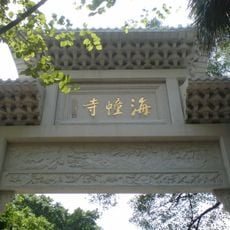
Hualin Temple, Buddhist temple in Liwan District, Guangzhou, China
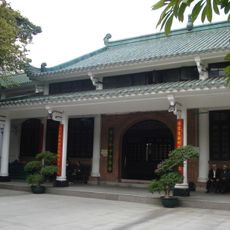
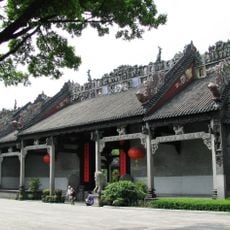
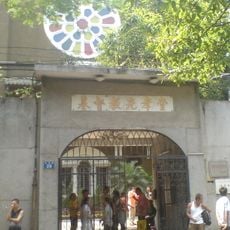
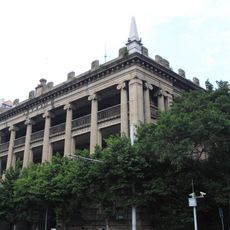
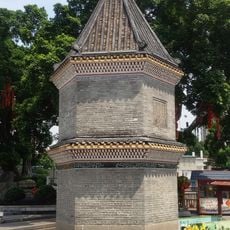
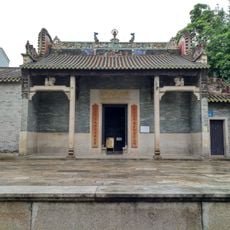
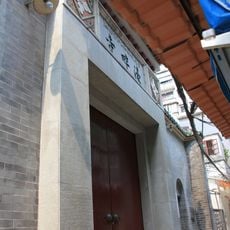
Hualin Temple, originally Xilai Monastery, occupies a walled compound entered from Changshou West Road. Its surviving core is the 500 Arhat Hall, a granite-footed, grey-brick hall 44 m long and 31 m wide with a "田"-shaped plan and four light wells. The seven-storey white stone reliquary pagoda stands at the northern end, and the 1997 Bodhidharma Hall enshrines a 6.88 m, 10-tonne bronze statue cast in Foshan.
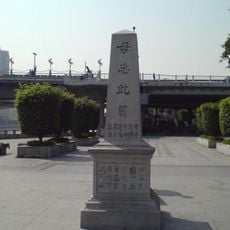
Founded in 526 as Xilai Monastery, after Bodhidharma landed on the north bank of the Pearl River. In 1655 the Linji monk Zongfu rebuilt it and renamed it Hualin. The 1849–1851 Arhat Hall survived the 1924 demolition of most halls, but the 500 arhat statues and the bronze Ashoka Pagoda were destroyed during the Cultural Revolution.
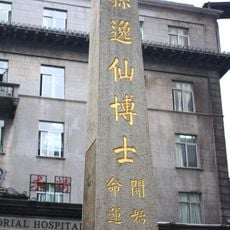
The temple's name comes from the 1655 renaming by Zen master Zongfu, who rebuilt the Xilai Monastery. The 500 arhat hall, completed in 1851, includes a statue of Marco Polo as the arhat Shande, and the hall's layout follows a 'tian' character pattern with four light wells.
The temple is close to Hualinsi metro station, making it easy to reach by public transport from most parts of the city. It sits in the older part of central Guangzhou, so combining a visit with a walk through the surrounding streets and markets works naturally.
The temple's English name was long rendered as "Temple of 500 Genii" or the Cantonese postal spellings "Wah Lum Temple" and "Wa Lam Monastery"; authorities now use the pinyin "Hualin Temple", while the metro station is translated as Hualinsi Buddhist Temple. The 500 arhat hall, completed in 1851, includes a figure modelled on Marco Polo.
The community of curious travelers
AroundUs brings together thousands of curated places, local tips, and hidden gems, enriched daily by 92,856 contributors worldwide.