Guangxiao Temple, Buddhist temple in Guangzhou, China
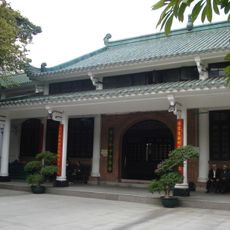
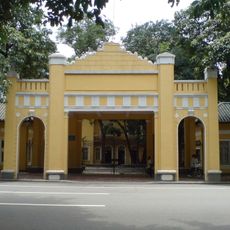
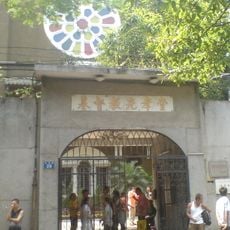
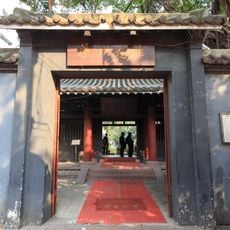
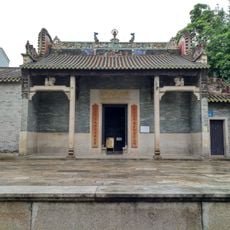
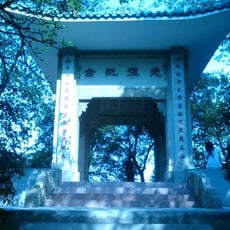
Guangxiao Temple is a Buddhist temple complex entered through the Shanmen gate, with the Tianwang Hall, the Daxiongbao Hall and the Liuzu Hall among its main structures. The Daxiongbao Hall, first built in 401 and last rebuilt in 1654, measures 35.36 m wide, 24.8 m deep and 13.6 m high, with wooden windows, some fitted with translucent shells. Behind it stand the Yifa Pagoda and two iron pagodas.
The site was the residence of Zhao Jiande, king of Nanyue, whose usurpation prompted Emperor Wu of the Han to annex the region. After the Wu scholar Yu Fan died in 233, his family donated the estate as Zhizhi Temple. It was repeatedly renamed before the Chenghua Emperor fixed the name Guangxiao in 1482.
The temple's name comes from the 1150 renaming to Bao'en Guangxiao Temple, later shortened to Guangxiao. The 1612 wooden plaque inscribed with "Helin" by scholar Qu Daxiang still hangs above the Maitreya statue in the Shanmen and is the oldest wooden plaque in Guangzhou. The temple is also the seat of the Buddhist Association of Guangdong Province.
The temple is located at the northern end of Guangxiao Road in Yuexiu District and can be reached via metro line 1 at Ximenkou Station or by several bus routes. Access is straightforward since the site sits in a central location with good transport connections.
The sanctuary houses an Eastern Iron Pagoda dating from 967 CE, standing with seven tiers of cast iron construction. This rare medieval structure is one of the few surviving examples of its type from that era.
The community of curious travelers
AroundUs brings together thousands of curated places, local tips, and hidden gems, enriched daily by 93,278 contributors worldwide.