Temple of the Six Banyan Trees, Buddhist temple in Guangzhou, China
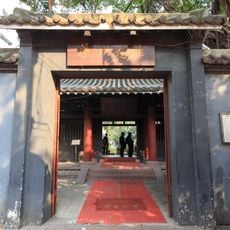
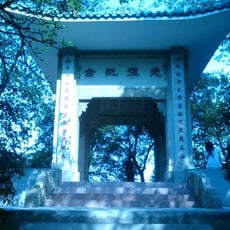
The Temple of the Six Banyan Trees is a Buddhist temple in Guangzhou featuring a distinctive Flower Pagoda that rises 57 meters (187 feet) tall with eight sides and nine tiers. The complex contains multiple prayer halls, a pagoda open to visitors, and several courtyards displaying traditional Chinese architectural design.
The temple was founded in 537 during the Liang Dynasty, making it one of the oldest sites in the city. It received its current name from the renowned poet Su Shi during the Song Dynasty, who left inscribed characters at the entrance that gave the place its lasting identity.
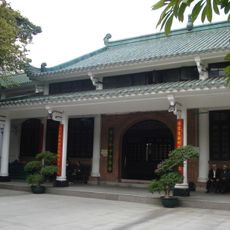
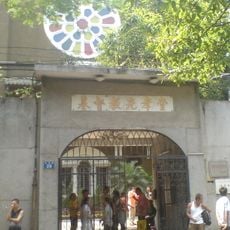
The temple's name comes from six banyan trees Su Shi saw here in 1100; his calligraphy of "Six Banyans" still hangs above the gate. A couplet on the door honors Wang Bo and Su Shi. Families adopting Chinese children often receive blessings before the Guanyin statue.
Visitors can climb the pagoda via internal stairs that lead to different levels, offering views across the city. Information displays in multiple languages help explain the temple's layout and the Buddhist traditions practiced here.
The three 6-metre, 10-tonne bronze Buddhas in the Mahavira Hall were cast in 1663 under the Kangxi Emperor and first stood in Dafo Temple. Red Guards dismantled them in the Cultural Revolution; Zhou Enlai intervened, and in 1972 they were welded back together and moved here for Nixon's visit.
The community of curious travelers
AroundUs brings together thousands of curated places, local tips, and hidden gems, enriched daily by 92,783 contributors worldwide.