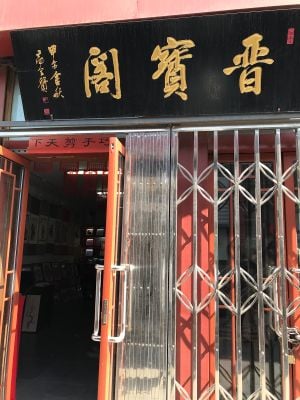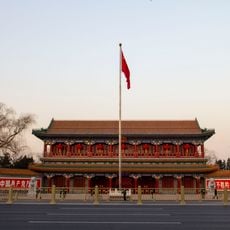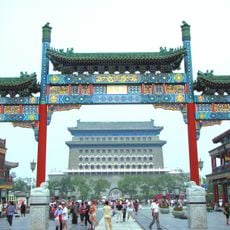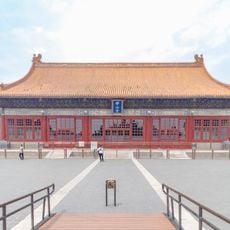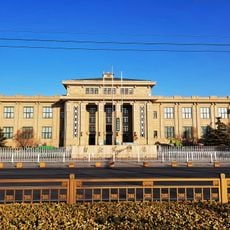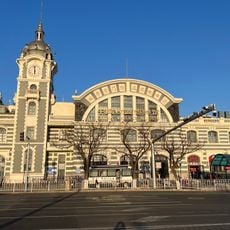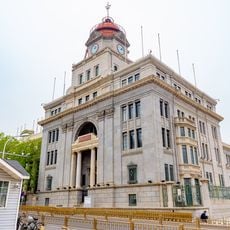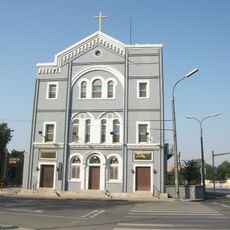
Beijing Anhui Guild Hall, Historical museum in Xicheng District, China.
The Beijing Anhui Guild Hall is a complex of several connected buildings that displays traditional Chinese architecture throughout. Its rooms feature carved wooden beams, painted ceiling supports, and decorated surfaces that show the craftsmanship of the builders.
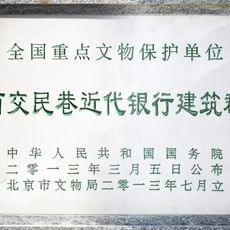
Built in 1871 on the former site of Sun Chengze's garden, the guild hall was funded by Li Hongzhang, Li Hanzhang and other Huai Army officers as a base for Anhui officials and generals in Beijing. A fire destroyed it in 1889 and it was rebuilt with further donations from Li Hongzhang. During the 1898 Reform Movement it housed the Qiangxue Society. It became a National Key Cultural Relic in 2006.
This was a gathering place where merchants from Anhui conducted business and built relationships with each other. The preserved spaces show how these traders organized their daily work and social life.
The museum is open Tuesday through Sunday and visitors can explore exhibition halls and gardens at their own pace. Guided tours in multiple languages are available if you want more detailed information about specific areas.
The guild hall is the only surviving building in Beijing tied to the birth of Peking opera. The Sanqing troupe and actors Cheng Changgeng and Liu Gansan performed here, and a playbill from an 1886 Sanqing performance is kept to this day. Hong Sheng's opera The Palace of Eternal Life was also staged here, and Tan Xinpei appeared on this stage.
The community of curious travelers
AroundUs brings together thousands of curated places, local tips, and hidden gems, enriched daily by 94,632 contributors worldwide.