Qinghui Garden, Classical Chinese garden in Shunde District, China.
Qinghui Garden is a classical Chinese garden in Shunde District, near Foshan in Guangdong Province. It brings together pavilions, halls, bridges, and ponds arranged according to traditional Chinese garden design, and holds national protection status as a major historical and cultural site.
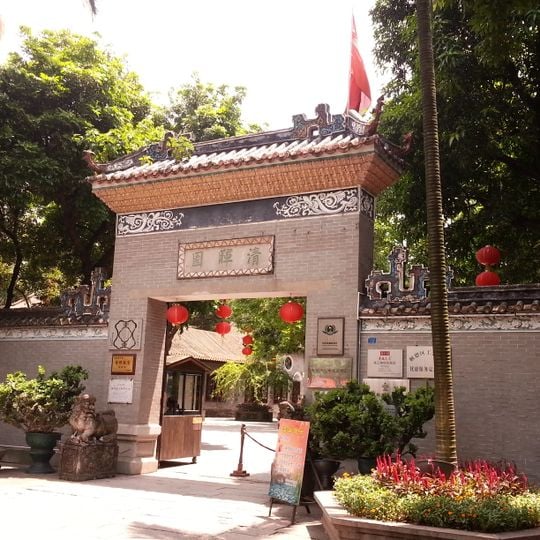
The site began as the Huang family garden: Huang Shijun, a zhuangyuan of 1607 and a minister, built ancestral halls and pavilions there in 1621. In the Qianlong era the Long family acquired the property; Long Tinghuai retired in 1800 and built the garden, and in 1806 Li Zhaoluo wrote the name Qinghui Yuan for its gate. Five generations of the Long family enlarged it.
The garden shows the Lingnan style, a regional way of building from southern China that favors open corridors, decorated rooftops, and a close relationship with water. Walking through it, you notice how each turn opens onto a new framing of rocks, plants, and ponds.
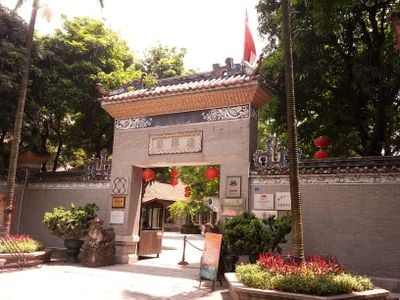
The garden covers about 5.1 mu (0.34 hectares) and is divided into three sections: the southern water area with its square pond, the central section with the boat hall and Lion Hill, and the northern bamboo courtyard. Paths run from the open front to the denser rear, so walk from south to north. The gateway on Qinghui Road has a small guard booth inside its opening.
The garden holds a collection of old trees, some dating back to the Qing Dynasty, still standing in their original positions. A few of these trees were planted by the families who once owned the garden, making them living links to its past.
The community of curious travelers
AroundUs brings together thousands of curated places, local tips, and hidden gems, enriched daily by 93,939 contributors worldwide.