东华里古建筑群, Historical architectural complex in Foshan, China.
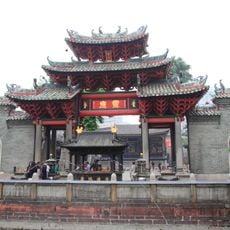
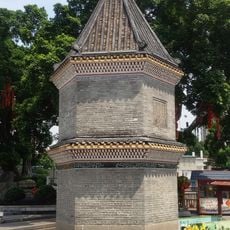
Donghua Lane is a complex of traditional buildings in Foshan featuring classical Chinese architectural design throughout. The structures showcase intricate wooden carvings, decorative stonework, and interconnected courtyards with varied building heights and walkways.
Originally called Yangwu Street, the lane was named for the Yang and Wu families who lived there in the early Qing dynasty. After both clans declined it took its present name in the Qianlong era; the Luo family moved in under Jiaqing and Daoguang, and the Zhao family arrived in the late Qing. Successive repairs and rebuilding produced the present layout, and in 2001 the complex was listed in the fifth batch of Major Historical and Cultural Sites Protected at the National Level.
The lane's name changed from Yangwu Street, after the Yang and Wu families who lived here in the early Qing, to Donghua Lane during the Qianlong reign. The Luo family moved in under Jiaqing and Daoguang, and the Zhao family in the late Qing; their repeated renovations gave the lane its present form.
The complex lies on Fuxian Road in the Zumiao subdistrict of Chancheng, Foshan. The main lane runs 112 metres and the whole group covers 6,700 square metres, so allow time to walk its length. The site is a protected national heritage group, so access follows conservation rules rather than a commercial opening regime.
The lane was originally called Yangwu Street, after the Yang and Wu families who lived here in the early Qing dynasty. Both clans later declined, and during the Qianlong reign the name changed to Donghua Lane; the Luo moved in under Jiaqing and Daoguang, the Zhao in the late Qing.
The community of curious travelers
AroundUs brings together thousands of curated places, local tips, and hidden gems, enriched daily by 93,875 contributors worldwide.