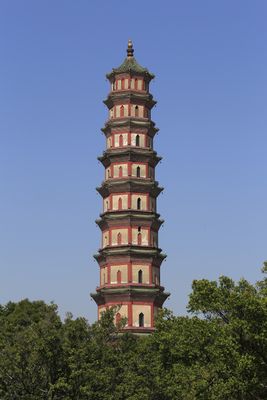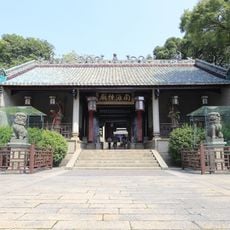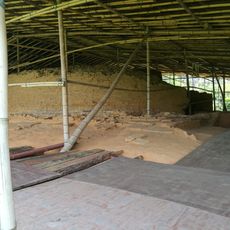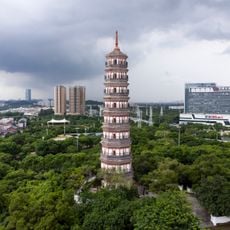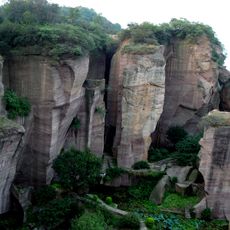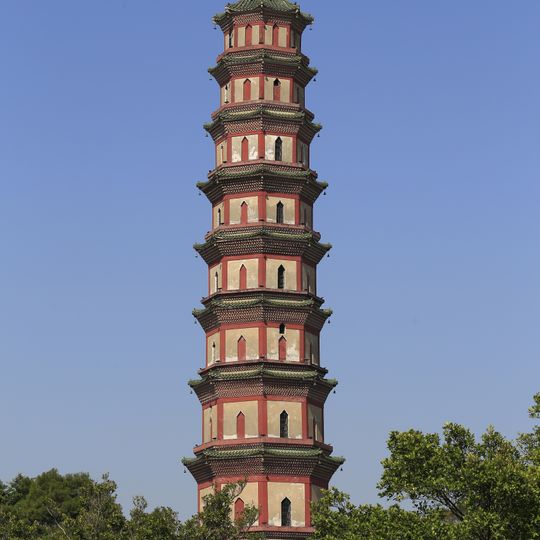
Lianhua Pagoda, Ming Dynasty pagoda on Lianhua Hill, Guangzhou, China
Lianhua Pagoda is an 11-story brick structure that stands on a hill in Panyu District, showing traditional Chinese architectural style. Each level displays design features typical of Ming Dynasty construction methods and materials.
Lianhua Pagoda was built in 1612, the 40th year of the Wanli reign, by five local figures including the juren Li Weifeng and Liu Ruxing, who raised funds to stop mining from damaging the site's earth veins. It was damaged by artillery fire during the Opium War and the War of Resistance Against Japan, and in 1981 the brothers He Tian and He Xian paid for its restoration. In June 1989 it was listed as a Guangdong Provincial Cultural Relic Protection Unit.
The pagoda is named after the lotus flower, which holds special meaning in Chinese tradition. Walking through its levels, you notice carved details and decorations that reflect the skilled craftsmanship of Ming Dynasty builders.
The structure sits on elevated ground and can be spotted from various points around the neighborhood. The hilltop location provides views over the surrounding area, especially on clear days.
The pagoda was called Shili Tower because Lianhua Hill produced whetstones, and Shizi Tower after the Lion Rock east of the hill. Ships entering the Pearl River estuary used it as a navigation mark, earning it the name "Huabiao of the Provincial Capital".
The community of curious travelers
AroundUs brings together thousands of curated places, local tips, and hidden gems, enriched daily by 93,086 contributors worldwide.