曲水园, Classical Chinese garden in Shanghai, China
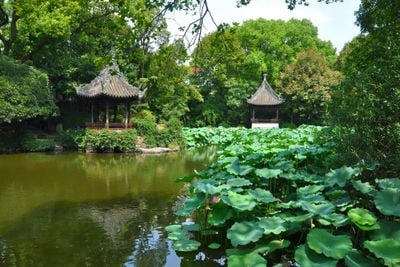
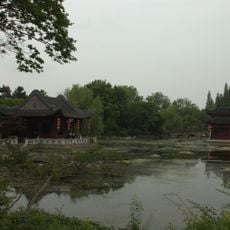
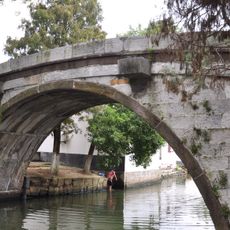
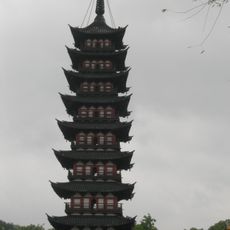
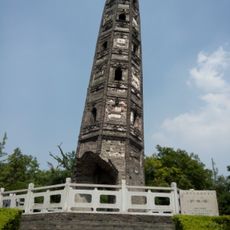
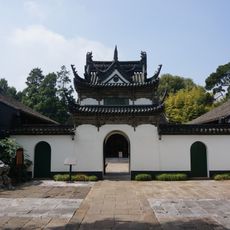
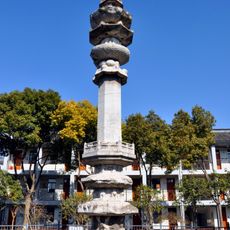
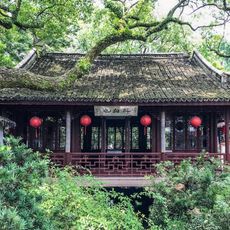
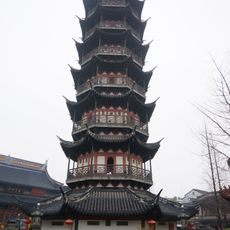
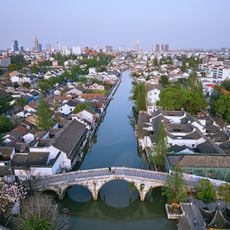
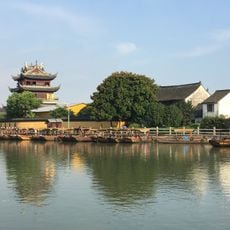
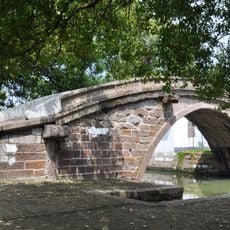
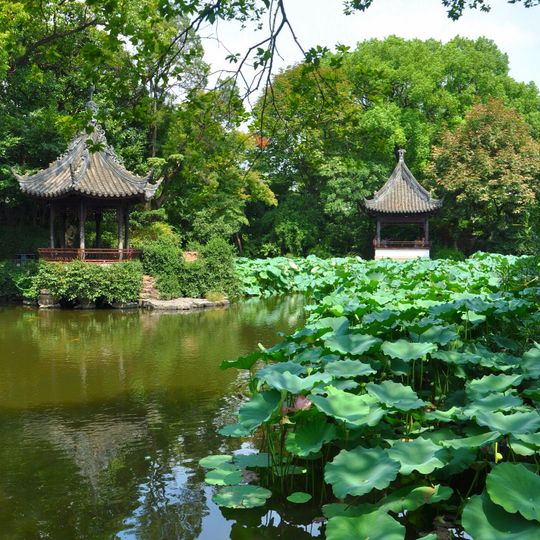
Qu Shui Yuan is a classical Chinese garden in Shanghai featuring flowing streams, traditional pathways, and multiple pavilions arranged throughout its grounds. The layout combines artificial ponds with bridges, rock gardens, and covered halls that together create a layered space for walking and viewing.
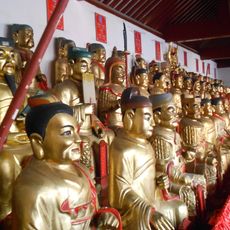
Qushui Garden was built in 1745–1746 as a temple garden attached to the Qingpu County City God Temple, founded in 1573. It was destroyed in 1862 during fighting for Qingpu, then rebuilt from 1884 to 1910 over 27 years, adding garden banks, walls and a release pond. In 1911 it passed to the county public funds office, and from 1927 to 1980 it was named Zhongshan Park.
The name Qushui comes from the "floating wine cups on a winding stream" passage of the Lantingji Xu, adopted in 1798; the earlier name Lingyuan, or Yiwen Yuan, recalls residents each donating one wen, a "one-wen vow", at the garden's founding. It was a temple garden of the Qingpu City God Temple, established in 1573, until 1911, when it became a public park.
The garden is open daily to visitors and best explored in the morning when crowds are lighter. Comfortable walking shoes are recommended since pathways are uneven and numerous bridges require crossing.
The garden's name comes from the "floating wine cups on a winding stream" passage in the Preface to the Orchid Pavilion Collection, adopted in 1798. It also recalls its origin: residents each gave one coin, a practice called yiwenyuan, so the garden was nicknamed the One-Coin Garden.
The community of curious travelers
AroundUs brings together thousands of curated places, local tips, and hidden gems, enriched daily by 94,091 contributors worldwide.