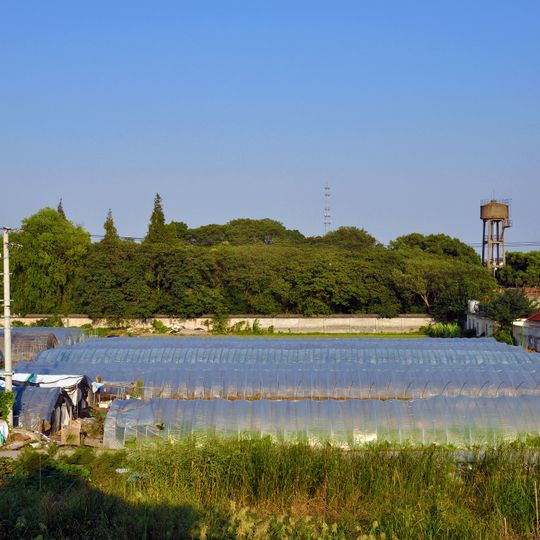
Fuquanshan site, Archaeological site in Qingpu, China
The Fuquanshan site is an archaeological location in Qingpu with multiple excavation areas revealing different settlement layers. The distinct soil layers show how people inhabited this place over many centuries.
Systematic exploration of the site began in 1962, uncovering artifacts from the Neolithic Liangzhu culture. These discoveries document one of the oldest known civilizations in the Shanghai area.
The hill's name changed over time: first Xirang, then Fuchuanshan for its boat-like shape, and Fuquanshan after its sweet well water; it was also called Xuedaoshan after a Daoist named Xue who lived here. The 32 Liangzhu tombs on the mound held axes, yue blades, cong tubes, bi discs, ding and yan vessels, gui and incense burners, and some had coffins and sacrificial pits with human victims.
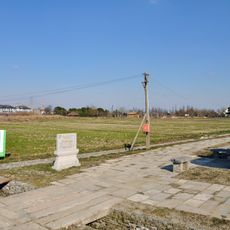
The site lies about 200 metres west of Zhonggu in Chonggu town, Qingpu district, within a 200-metre protection radius around the mound. The mound itself is 7 metres high, 84 metres north to south and 94 metres east to west, with excavated layers in the surrounding fields. A Shanghai Museum excavation station opened at the site in April 2023.
The visible soil layers display different colors that act like a visual calendar of past settlements. Visitors can see these colored horizons directly in the ground and understand how long people lived here.
The community of curious travelers
AroundUs brings together thousands of curated places, local tips, and hidden gems, enriched daily by 93,558 contributors worldwide.