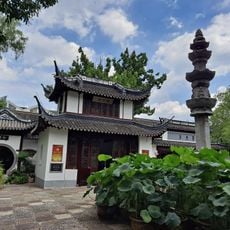
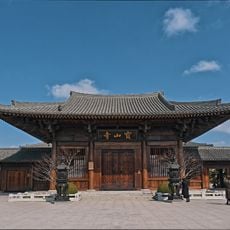
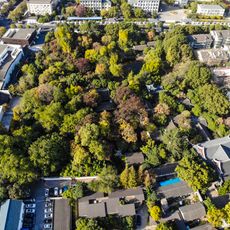
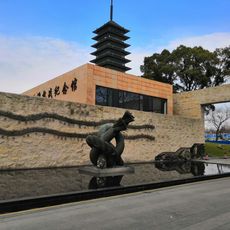
Jiading Confucian Temple, Confucian temple in Jiading District, Shanghai, China.
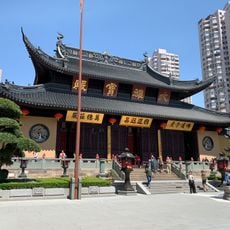
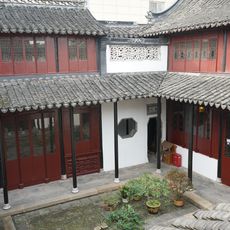
The Jiading Confucian Temple is a large temple complex in Jiading with traditional Chinese architecture featuring multiple halls and courtyards arranged in symmetrical patterns. The buildings showcase detailed wooden carvings and carefully designed rooflines built according to classical construction standards.
Gao Yansun, Jiading's first county magistrate, founded the temple in 1219 as the Wenxuan Wang Temple, with a Confucian school to its east. It was renamed Dacheng Hall in 1265, and the Ming dynasty added Yingkui Hill and the Hulong Pond in 1509 and 1603. The temple was damaged during the Cultural Revolution, then restored and reopened in 2024.
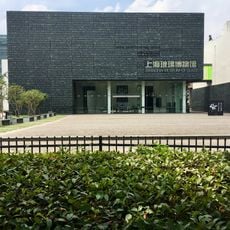
The temple's halls honour local figures as well as Confucius: the Xiangxian Shrine holds tablets of Jiading's cultural worthies and loyal citizens, the Minghuan Shrine those of upright officials, including magistrates who governed the county. In the east and west wings are tablets of Confucius's disciples and later Confucian followers. Since 2006 the complex has also housed the Shanghai Chinese Imperial Examination Museum.
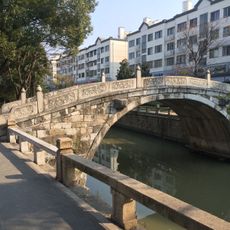
The temple is at 183 Nandajie Street in Jiading town, covering 1.8 hectares with 3,800 square metres of buildings along a central axis. Enter through Lingxing Gate past the semicircular Panchi; the three arch bridges date from 1390. The complex closed for renovation on 22 May 2023 and reopened on 22 September 2024, so check current opening status before travelling.
The stone lions outside Lingxing Gate survived the Cultural Revolution because locals built a brick wall covered with political slogans around them. The wall hid the lions from destruction, and they remain in place today.
The community of curious travelers
AroundUs brings together thousands of curated places, local tips, and hidden gems, enriched daily by 94,529 contributors worldwide.