张溥宅第, Chinese historical residential complex in Taicang, China.
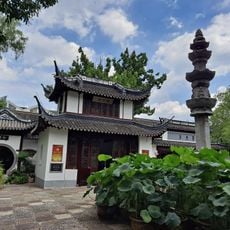
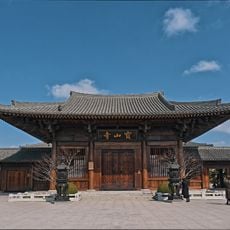
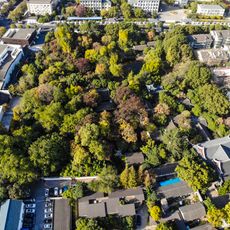
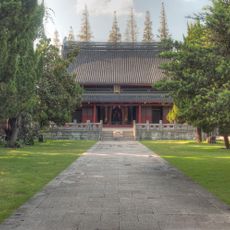
The Zhang Pu Residence stands on Ximen Street in Taicang, Jiangsu. Three surviving bays of five rooms each are linked by covered walkways, forming a continuous two-storey circuit of the Jiangnan type known as a zouma tanglou, or horse-walk hall. It was built by Zhang Pu's uncle Zhang Fuzhi during the Tianqi and Chongzhen reigns.
Zhang Pu's residence was built by his uncle Zhang Fuzhi during the Tianqi and Chongzhen reigns of the Ming dynasty. Zhang Pu (1602–1641) led the Fushe, a late-Ming scholarly society that met at the house. In 2006 it was listed in the sixth batch of Major Historical and Cultural Sites Protected at the National Level.
The name Fu She (Restoration Society) refers to the late-Ming literary and political association that met in these halls; Zhang Pu (1602–1641) led it and gathered scholars here to discuss Confucian classics, literature and state affairs. The three interconnected halls, joined by covered corridors into a continuous horse-walk building, reflect the Jiangnan scholar-gentry household where such meetings took place.
The residence stands on Ximen Street in Taicang, Jiangsu. The surviving three bays of five rooms are linked by a covered corridor, so you walk the whole house under one continuous roof, the Jiangnan type called a zoumatang lou. Look for the covered walkways joining the sections.
The residence was built by Zhang Pu's uncle, Zhang Fu, during the Tianqi and Chongzhen reigns, not by Zhang Pu himself. Zhang Pu (1602-1641) led the Fu She, the late-Ming literary society that met here; the building's 2006 listing is as a sixth-batch national key cultural relic.
The community of curious travelers
AroundUs brings together thousands of curated places, local tips, and hidden gems, enriched daily by 94,501 contributors worldwide.