Yu's Ancestral Temple in Ma'ao, Ancestral hall in Ninghai County, China.
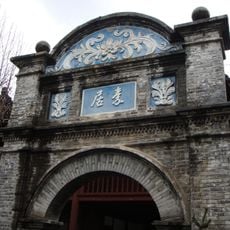
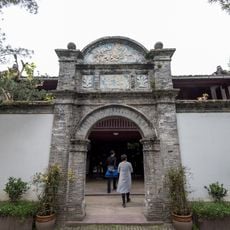
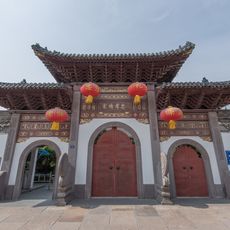
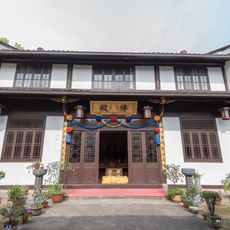
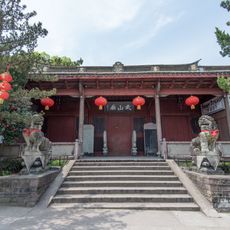
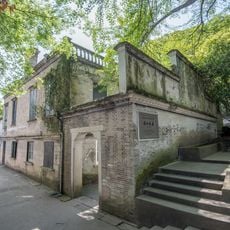
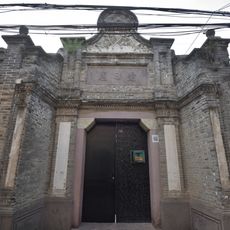
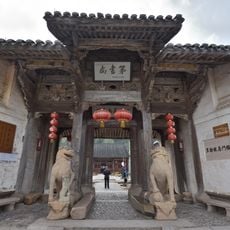
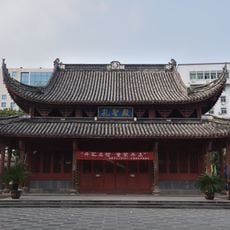
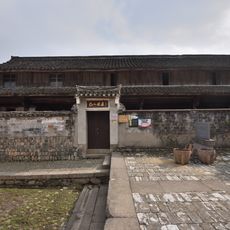
Yu's Ancestral Temple in Ma'ao is a hall dedicated to ancestor veneration for the Yu family located in Ninghai County. The building displays crafted details including intricately carved wooden elements, curved roofs with decorative ridges, and stone work scattered throughout its courtyards.
The Yu ancestral hall was first built in 1580, burned in 1648 after Yu Shusu's failed anti-Qing uprising, rebuilt in 1680 and destroyed again in 1910. In 1911 Yu Mincheng led its reconstruction with craftsmen from Ninghai and Xinchang using the 'piezuo' method; it was completed in 1916. The stage was listed in 2006 as part of the Ninghai Ancient Stages national heritage site.
The hall's name Yongsi Tang, "Hall of Endless Remembrance," and its plaque "Tang Governor Yu's Family Temple" link the Yu lineage to a Tang-era ancestor. The gate couplet "发源由剡邑,溯本自青州" traces the family's origin to Shan and Qingzhou. Since 1984 the hall has served as the village assembly hall, so no opera is performed on its stage.
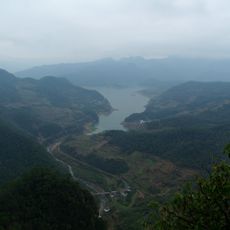
The hall stands in the middle of Ma'ao village, reached from Shenzhen town in Ninghai County. Enter along the central axis: front courtyard, ceremonial gate, stage, then main hall, with seven side rooms on each side. The stage platform is 1.5 m high and ringed by a railed balustrade. Since 1984 the hall has served as the village assembly hall and no longer stages opera.
The stage's coffered ceiling spirals from sixteen rings of shaped brackets, each with thirteen false brackets and a dragon head above a small carved lion; bats ring the opening. The mirror at the top has lost its original carving. The stage stands 1.5 metres high inside a square railing whose panels show scenes from The White Snake and the Peach Garden Oath.
The community of curious travelers
AroundUs brings together thousands of curated places, local tips, and hidden gems, enriched daily by 94,633 contributors worldwide.