Schloß Pesch, Medieval castle in Meerbusch, Germany
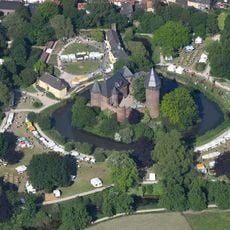
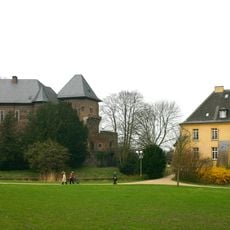
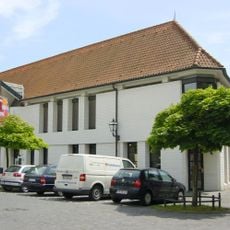
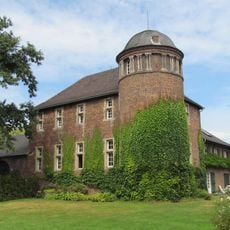
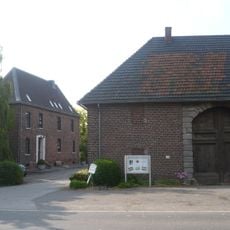
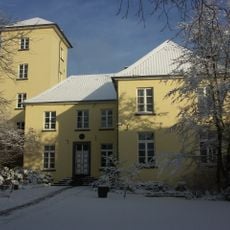
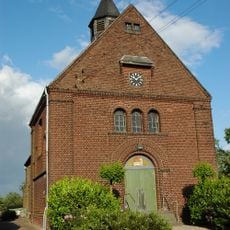
Schloss Pesch is a castle in Meerbusch, North Rhine-Westphalia, made up of a main residence with a wide, window-lined facade, three outbuildings, and a tower fitted with a clock face. The whole ensemble sits within a wooded setting that encloses the estate on all sides.
The estate first appears in written records in 1311 under the name Peschhof and passed into the hands of the knight Godert Knop's family in 1368. Over the following centuries, ownership changed several times and each new owner left their mark on the buildings.
The name Pesch is first documented in 1311 as "Peschhof"; the sources give no Latin etymology for it. The estate lay on former Electoral Cologne territory yet remained an independent property owing no feudal duty to the Cologne prince-archbishop. In 1863, six votive stones to the Matronae and to Mercurius Arvernus were found between the neighbouring Haus Gripswald and the castle.
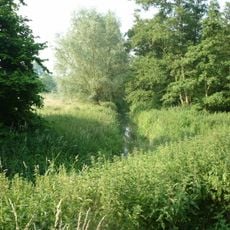
The buildings are used today as private residences and offices, so visitors cannot enter them. The wooded area around the estate can be explored on foot along marked paths, which makes for a pleasant walk in any season.
On 23 June 1758, 47,000 French soldiers were camped around Fischeln, northwest of the castle, during the Seven Years' War. After the Battle of Krefeld they withdrew through Osterath that evening. The castle itself was not fought over; it was already held by Baron Matthias Gerhard von Hoesch, who gained a seat in the Landtag through it.
The community of curious travelers
AroundUs brings together thousands of curated places, local tips, and hidden gems, enriched daily by 93,669 contributors worldwide.