Statue Freiherr Karl vom und zum Stein, listed architectural structure in Berlin-Mitte
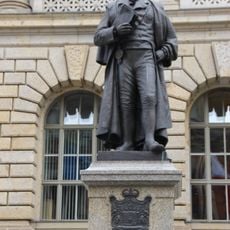
The Statue of Freiherr Karl vom und zum Stein is a bronze and granite figure standing 7.8 meters tall, depicting a man in a coat with a serious expression, his left hand resting on a walking stick and his right hand slightly extended. The base features multiple levels decorated with relief images showing scenes from his life and is topped by four smaller figures at each corner.
The work was begun by Hermann Schievelbein between 1864 and 1869 and completed by Hugo Hagen after Schievelbein's death, then cast in bronze in 1875. Originally placed at Dönhoffplatz, the statue was relocated multiple times and has stood at its current location in front of the Parliament building since 2003.
The monument bears the inscription "DEM MINISTER / FREIHERRN VOM STEIN / DAS DANKBARE VATERLAND". The four corner figures personify piety, truth, willpower and patriotism; the reliefs between them show hope, sacrifice, popular uprising and victory. The figure of Vaterlandsliebe holds a ribbon of the Monumenta Germaniae Historica, which Stein founded.
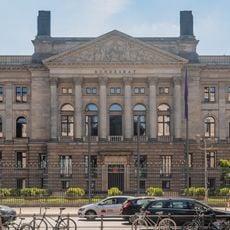
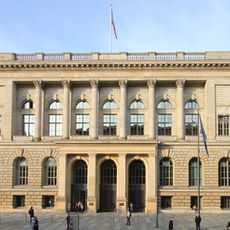
The statue stands in front of Berlin's Parliament building on Unter den Linden and is easily accessible and free to view from the street. You can walk by at any time and view it from different angles, with the best perspective gained from the front of the monument.
The monument has stood at its current site only since 2003, when it was moved here on the initiative of Walter Momper after the reconstruction of the Kommandantenhaus. One of the four corner figures, Vaterlandsliebe, holds a band of the Monumenta Germaniae Historica, the source collection Stein founded.
The community of curious travelers
AroundUs brings together thousands of curated places, local tips, and hidden gems, enriched daily by 93,312 contributors worldwide.