Amyclae, Archaeological site near Sparta, Greece
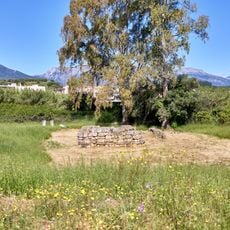
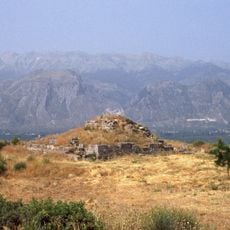
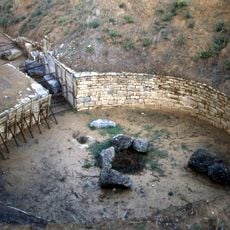
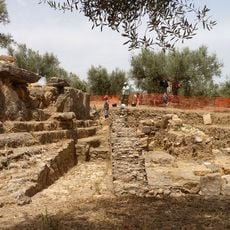
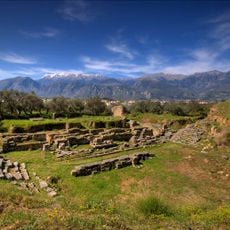
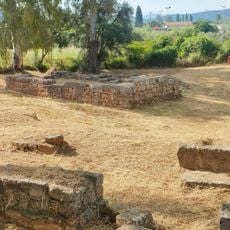
Amyclae is an ancient sanctuary near Sparta situated on a western slope above the Eurotas River, containing foundations and structures spanning multiple time periods. The site preserves retaining walls and a circular altar constructed from local stone, revealing details about how religious sites were built and maintained in antiquity.
The site began as a center of Achaean settlement before Spartan conquest in the 8th century BC transformed it into a controlled village within their realm. This takeover marked a shift in regional power and permanently altered the character of the place.
The site held deep meaning for Spartans as a sacred place where people gathered to honor Apollo through worship and festivals. These communal celebrations were rare moments of civic gathering in a society otherwise defined by military discipline.
The site sits about two kilometers northeast of the modern village of Amykles and is accessible on foot from there. Visitors should expect uneven terrain and exposed foundations, so sturdy footwear and time for careful exploration are practical considerations.
At the center of the sanctuary stood a massive wooden statue of Apollo, roughly 14 meters tall and covered with bronze plating. This extraordinary work of art was one of antiquity's most impressive creations, though only underground remains of it survive today.
The community of curious travelers
AroundUs brings together thousands of curated places, local tips, and hidden gems, enriched daily by 91,983 contributors worldwide.