Cularo, Archaeological site in central Grenoble, France.
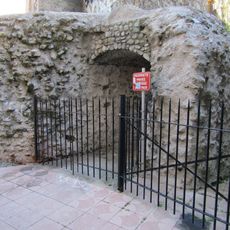
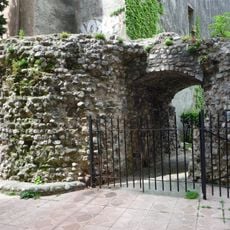
Cularo is the Gallic town that became Grenoble. Its visible remains are sections of a defensive wall built between 286 and 292 under Diocletian and Maximian, made of rough-cut grey and tan stones set in mortar, with moss and small plants in the joints and a rounded, uneven top. A rounded arched opening passes through the wall, closed by a black metal fence of vertical bars; behind it, a plastered surface is partly covered by climbing ivy.
In the third century, Roman emperors Diocletian and Maximian ordered the construction of defensive walls to protect the settlement from barbarian invasions. This fortification became a key part of the empire's strategy against threats from outside its borders.
The name Cularo comes from the Gaulish word for a field of gourds, and survives in the Dauphiné dialect as courla, a gourd. The inhabitants were Allobroges, on the border with the Voconces, and crossing the Isère there passed from one territory to the other.
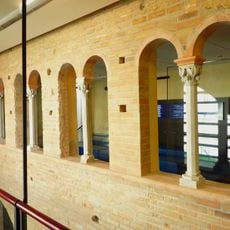
The Archaeological Museum of Grenoble displays the main artifacts and documentation from excavations at the site. It is the primary location where visitors can view findings and learn about the archaeological work done here.
The fortification walls were built using materials from earlier structures, including funerary monuments and salvaged stone from previous periods. These walls reached thicknesses of four to five meters and show how Romans recycled older materials for new construction.
The community of curious travelers
AroundUs brings together thousands of curated places, local tips, and hidden gems, enriched daily by 93,122 contributors worldwide.