Palais du parlement du Dauphiné, Historic courthouse in Place Saint-André, France
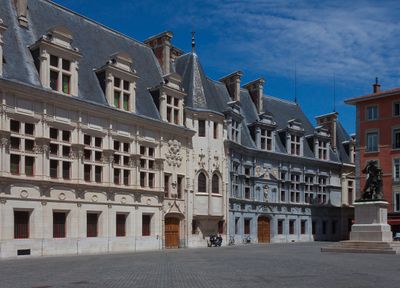
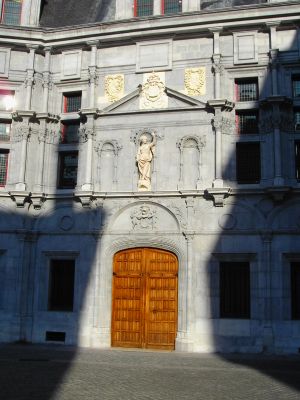
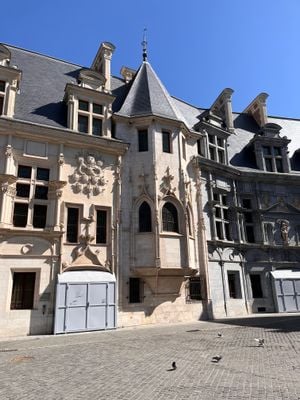
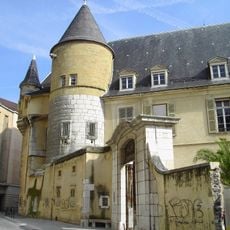
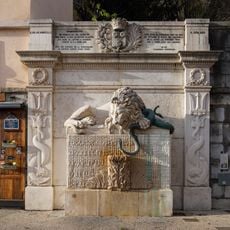
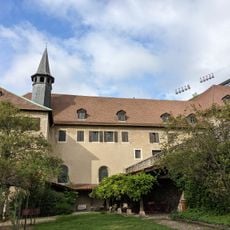
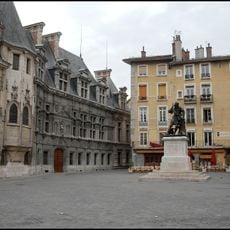
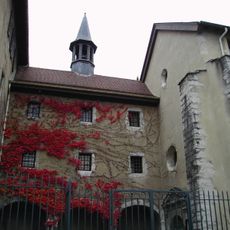
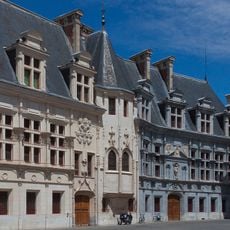
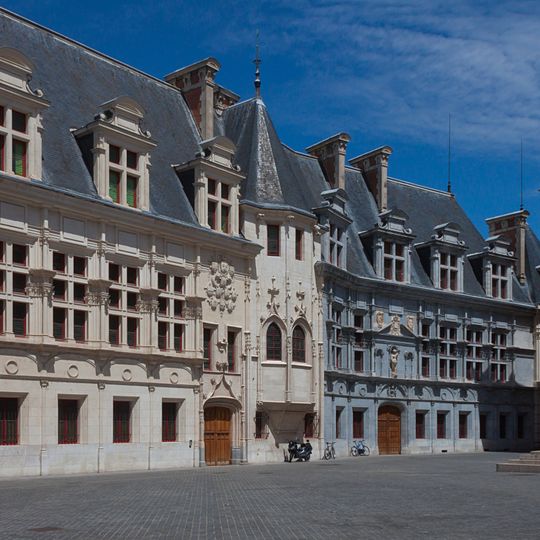
The Palais du Parlement du Dauphiné is a grand courthouse on Place Saint-André in Grenoble, built with two-toned stone from Échaillon quarries. Its facade displays carved coats of arms and animal sculptures that showcase craftsmanship blending different building periods.
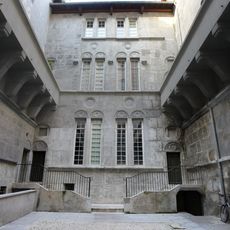
The Conseil delphinal, created in 1337 by Humbert II, was turned into the Parlement du Dauphiné by Louis XI in 1453, the third parliament in France after Paris and Toulouse. Construction on Place Saint-André began around 1500 under Louis XII in cream stone from the Échaillon quarry, with the chapel apse projecting from the facade. The building was enlarged in 1539 under Francis I and again in 1562 under Charles IX, the later wing in blue-grey Fontanil limestone. The parliament was dissolved at the Revolution and the building served as a courthouse until 2002.
The name of the Salle Bleue comes from its tapestries. It was there, on 7 June 1788, that the Journée des Tuiles began: magistrates were brought back from the Hôtel de la Première Présidence by a crowd shouting "Vive le parlement" to reopen doors the king's soldiers had sealed hours earlier. The palace's carved wooden cupboards and, under Louis XIV, painted ceilings belong to the same interior.
The building is owned by the Isère Departmental Council and opens to visitors at special times. The best time to visit is during Heritage Days, when the historical chambers and exhibitions become accessible.
The Nobilibus case in 1604 involved a monk who faced roughly 230 interrogations on sorcery charges within these walls. This unusual trial story remains little known and shows the intense legal drama that unfolded in the building.
The community of curious travelers
AroundUs brings together thousands of curated places, local tips, and hidden gems, enriched daily by 92,787 contributors worldwide.