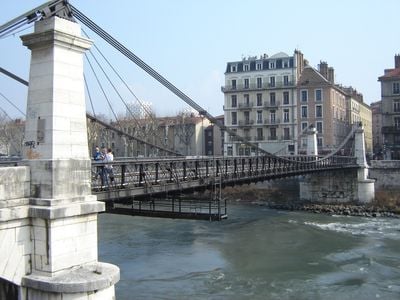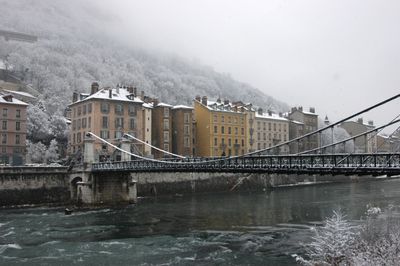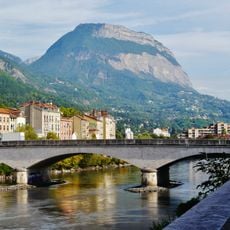
Passerelle Saint Laurent, Pedestrian bridge in Grenoble, France.
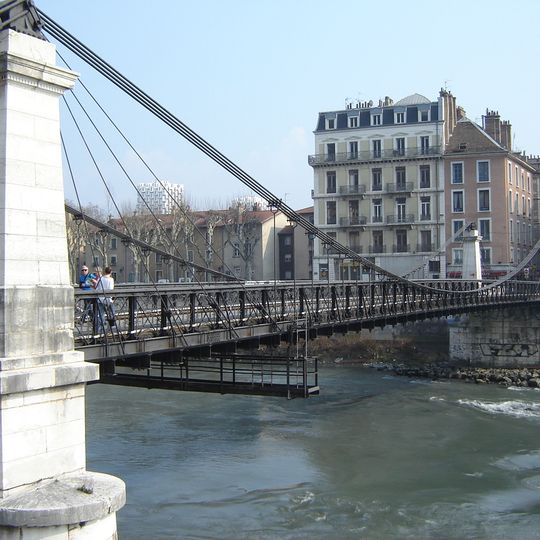
The Passerelle Saint Laurent is a metal pedestrian bridge spanning the Isère River in Grenoble, connecting the historic center to the Saint-Laurent district. The steel structure allows for a clear crossing of the river with open views of the water and surrounding areas.
The original wooden structure dated to the late 11th century and was one of the earliest crossings over the Isère. Over centuries it was destroyed and rebuilt multiple times, with the current metal version constructed in 1837 and modernized in 1909.
The bridge links two contrasting neighborhoods and serves as a daily passage for residents and visitors moving between the city center and the Saint-Laurent district. It functions as an important crossing point in the rhythm of urban life.
The footway is accessible year-round and provides a level, safe crossing without steep slopes or obstacles. The nearest tram lines are A and B, with stops at Hubert Dubedout Maison du Tourisme station.
For centuries this was the only way to cross the river, linking important trade routes between the valley and the mountains. The original wooden bridge even carried a small chapel that stood until devastating floods in 1651 swept it away.
Location: Grenoble
Address: Passerelle Saint-Laurent
GPS coordinates: 45.19420,5.72919
Latest update: December 6, 2025 17:43
Grenoble displays architectural developments from the medieval period to the present day. The medieval Notre-Dame Cathedral stands in the historic center, while the Art Museum offers modern exhibition spaces. The city includes the Tour Perret, a cylindrical tower building from the 1920s, and the Garage hélicoïdal, a spiral parking structure from the same era. Religious buildings such as Saint-Louis Church and Saint-Bruno Church represent different stylistic periods. The Sainte-Cécile Convent and the Palace of the Parliament of Dauphiné show historic administrative and ecclesiastical architecture. The Bastille fortress overlooks the city and can be reached by cable car from Quai Stéphane Jay. The Hôtel de Lesdiguières and the Old Episcopal Palace document aristocratic residential culture. Paul-Mistral Park forms a large green space containing Lesdiguières Stadium and the Alpexpo conference center. The Saint-Laurent Bridge crosses the Isère River, while the Sainte-Claire market halls house daily commerce. Vizille Castle lies outside the city in the commune of the same name. The Musée dauphinois and the Museum of Resistance and Deportation present regional history, complemented by cultural facilities such as the MC2 cultural center and Le Magasin des horizons.
Grenoble sits in the Isère River valley, surrounded by three mountain ranges in the French Alps. The city combines alpine landscape with urban infrastructure and serves as a base for exploring the surrounding mountain regions. The Fort de la Bastille, accessible via a historic cable car, provides views over the city and valleys. Parc Paul Mistral covers 52 acres (21 hectares) in the city center and includes sports facilities and green spaces. The Musée de Grenoble displays European artworks from the 13th century to the present, including French painting and modern art. The Musée Dauphinois documents regional history and alpine culture. The Musée de l'Ancien Évêché focuses on local history from the Middle Ages to the present. Place Saint-André forms the historic center with medieval architecture, while Place Grenette serves as a central market square. Château de Vizille, located 9 miles (15 kilometers) south, was the site of the 1788 assembly and now houses a museum on the French Revolution. The Grottes de Sassenage, prehistoric limestone caves on the city outskirts, offer guided tours through underground galleries.
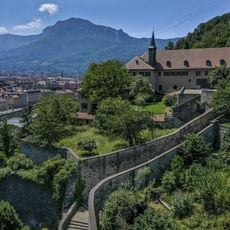
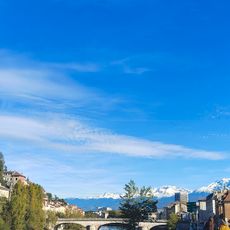
Grenoble offers numerous photography locations, from the Saint-Laurent Bridge over the Isère River to the Bastille fortress at 476 meters elevation. The city center includes the Victor Hugo square, the Dauphiné Parliament Palace from 1500, and the modern glass Museum. The medieval Saint-Laurent district presents stone houses along narrow streets. Parks and gardens provide natural settings with Alpine views.
Museum of Grenoble
254 m
Cularo
374 m
Musée dauphinois
196 m
Musée de l'Ancien Évêché
246 m
Hôtel de Lesdiguières
223 m
Palais du parlement du Dauphiné
114 m
Collegiate Church of Saint-André, Grenoble
171 m
Fountain of the three orders, Grenoble
249 m
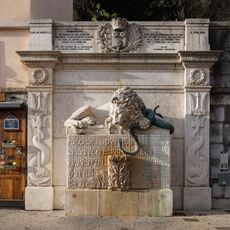
The Lion and Serpent fountain
96 m
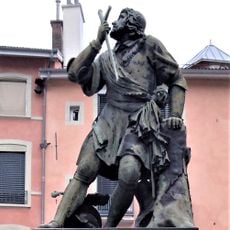
Statue of Bayard in Grenoble
143 m
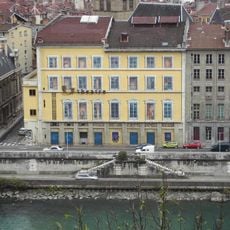
Théâtre Municipal de Grenoble
161 m
Musée Dauphinois
205 m
Tour de l'Isle
200 m
Place Saint-André
182 m
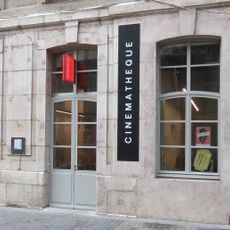
Cinémathèque de Grenoble
180 m
Citadel bridge
135 m
Tour de Sassenage
159 m
Hôtel d'Ornacieux
188 m
Hôtel de François Marc
182 m
Sainte-Marie-d'en-Haut
215 m
Ancien évêché de Grenoble
266 m
Grenoble Courthouse
189 m
Chapelle des dauphins
121 m
Caserne Vinoy
149 m
Hôtel Pierre Bucher
196 m
Immeuble, 14 rue Chenoise
173 m
Hôtel du Bouchage
164 m
Immeuble, 9 rue Chenoise
155 mVisited this place? Tap the stars to rate it and share your experience / photos with the community! Try now! You can cancel it anytime.
Discover hidden gems everywhere you go!
From secret cafés to breathtaking viewpoints, skip the crowded tourist spots and find places that match your style. Our app makes it easy with voice search, smart filtering, route optimization, and insider tips from travelers worldwide. Download now for the complete mobile experience.

A unique approach to discovering new places❞
— Le Figaro
All the places worth exploring❞
— France Info
A tailor-made excursion in just a few clicks❞
— 20 Minutes